

Commentary
Dimitar Bechev, Iliriana Gjoni
{
  "authors": [
    "Dimitar Bechev"
  ],
  "type": "commentary",
  "blog": "Strategic Europe",
  "centerAffiliationAll": "",
  "centers": [
    "Carnegie Endowment for International Peace",
    "Carnegie Europe"
  ],
  "englishNewsletterAll": "",
  "nonEnglishNewsletterAll": "",
  "primaryCenter": "Carnegie Europe",
  "programAffiliation": "",
  "regions": [
    "Europe",
    "Western Balkans",
    "Ukraine",
    "Moldova"
  ],
  "topics": [
    "EU",
    "Foreign Policy",
    "EU Enlargement",
    "Trade"
  ]
}
Source: Getty
Europe isn’t as weak in the new geopolitics of power as many would believe. But to leverage its assets and claim a sphere of influence, Brussels must stop undercutting itself.
In the new era of spheres of influence, each anchored by a bullish dominant actor like the United States, China, or Russia, the EU is so illiterate in the language of power that it is destined to be a vassal. Or so popular wisdom goes.
Officials in U.S. President Donald Trump’s administration seem particularly fond of this view. Marco Rubio, the secretary of state and national security advisor, gave a stark ultimatum to Europeans in his speech at the Munich Security Conference: Enter into a civilizational alliance with the United States based on hard borders, curbs on migration, and coordinated economic protectionism, or face submersion and extinction.
In his view, the liberal universalism that has underpinned both U.S. might and prosperity and, as a result, Europe’s own wealth over the past eight decades, is “a foolish idea.”
But that pitch fails to understand the sources of European power. The EU’s regional and global reach relies on selectively softening borders, not building new walls and fortifications. To survive and prosper in the Trump era, the union is starting to realize that it needs to reinforce its defenses but—just as vitally—also do what it is good at: Building connections to deepen and expand its sphere of influence.
Politicians and pundits alike used to wax lyrical about what they called the Eurosphere: A network of formal and informal ties from Norway to the Eastern neighborhood, through the Balkans and across to North Africa. The EU’s first ever security strategy, adopted in 2003, spoke of “a ring of well governed countries.” Nowadays, ambitions are lower: Stability trumps loftier objectives such as the spread of democracy and rule of law. Yet the logic is the same: The EU is in the business of co-opting frontier countries by offering them membership, or by drawing them into its economic and political orbit.
Migration management is a prime example: To assert its interests, the union gives external actors a stake—however modest—in its internal affairs. Long before the European Commission reached out to the likes of Egypt or Tunisia, Italy was working with Libya, which acted as its de facto border guard.
Authoritarian regimes in North Africa, as well as Turkey, are happy to do the job of gatekeeping in exchange for money and trade concessions.
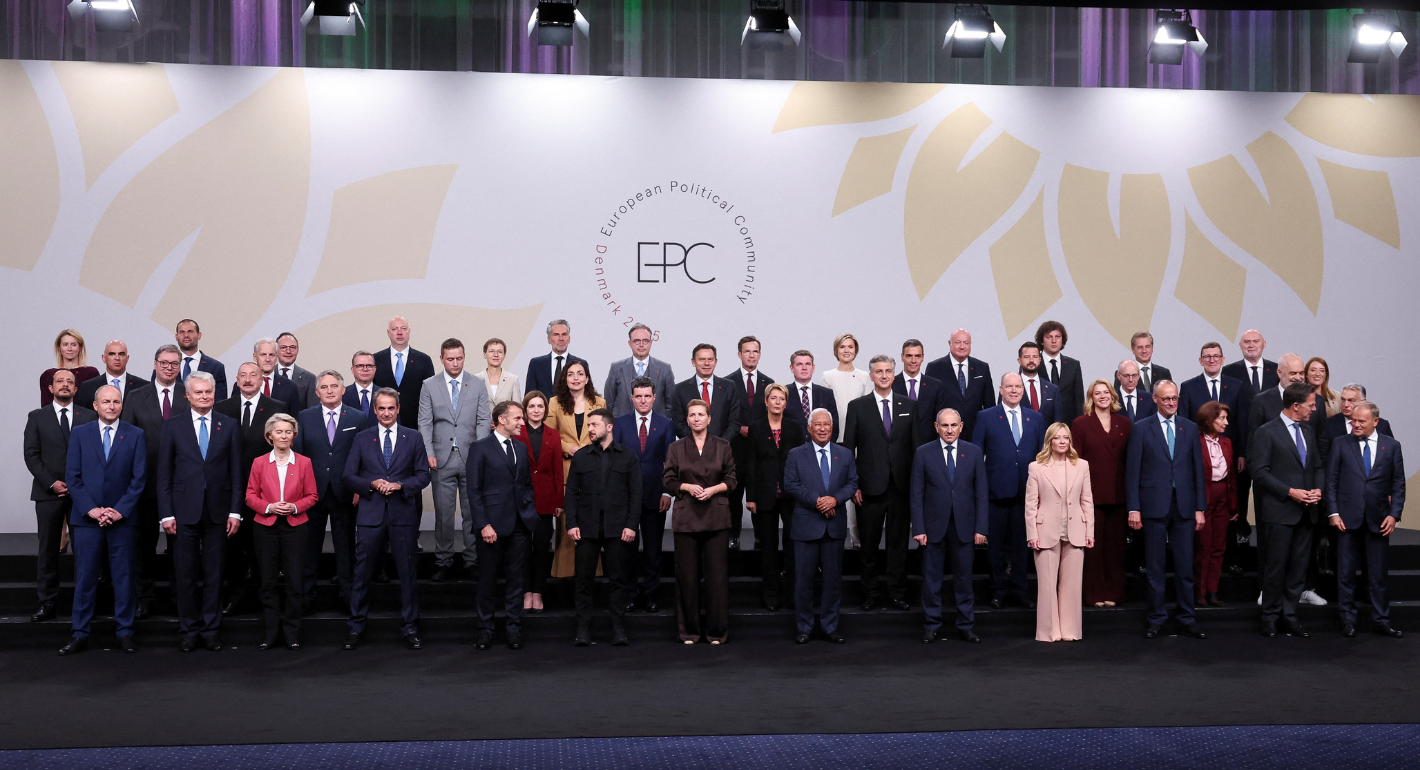
Being part of the European club is another perk that strongmen in wider Europe seem to enjoy. Azerbaijan, an autocracy which has more in common with Belarus than a median EU member, happily attends the gatherings of the European Political Community (EPC). Turkey’s President Recep Tayyip Erdoğan, himself no exemplary democrat, is also one of EPC’s stars. Dismissed as yet another talking shop, the brainchild of French President Emmanuel Macron has become a flagship project of the Eurosphere.
Co-optation is the name of the game in security and defense, too. The threat posed by Russia has accelerated rapprochement between the EU and the UK. It also improved ties with Turkey, a NATO member and major military power in wider Europe.
In May, 2025, the UK and EU concluded a security and defense agreement, similar to ones the union has with other third countries such as Norway, Japan, and Canada. These countries are increasingly part of common European defense in the broader sense. This is done through industrial partnerships with EU member states and through investment, as seen in the joint venture of Turkish defense contractor Baykar and Italy’s Leonardo S.p.A. to acquire Piaggio Aerospace.
Russia’s full-scale invasion of Ukraine in 2022 has made the EU much more forward-looking on the politically fraught issue of enlargement. In a first, the country’s integration into the union is being spearheaded by the defense field: Shared production and capacity-development are lifting barriers and erasing boundaries. Full accession still looks challenging at this stage, and it is a public secret that the European Commission has been mulling ideas of membership-lite whereby Ukraine would join without full voting rights or access to the EU budget. In the 2010s, the EU shrank with Brexit. In the 2020s, it changed gears and is in expansion mode once more.
Moldova is making strides toward membership, Montenegro and Albania are now knocking on the door with a view to joining by 2030. Iceland, Norway, and Switzerland are all either considering membership or deeply deepening their connection to Brussels.
Even at the global level where the EU has admittedly seen its collective footprint diminished, the prospects are far from gloomy. Just like in its regional sphere of influence, Brussels is doubling down on integration and pursuing a co-optative strategy. The recent trade deals struck with Mercosur and India are a fresh reminder that Europeans are an attractive partner. The fact they can’t send gunboats and commandos to foreign shores might have been a disadvantage when the West stood for a minimal respect for the rule of law. But it has turned into an asset for the Europeans of today, in light of Washington’s brutal exercise of its power. The U.S. abandonment of liberal internationalism has made world politics uncertain. By contrast, the EU projects certainty, despite the internal and external challenges it has to handle. Skeptics might write off the EU as deeply boring, irrelevant, or doomed to collapse. But by the looks of it, neither global financial markets nor middle powers—the stars of international politics these days—are short selling Europe.
To be sure, Washington’s vision of a fortress West is bound to resonate with some in Europe—the populist right first and foremost. But it is a non-starter. The reason is not that the United States of today is deeply unreliable or hellbent on turning European countries into voiceless vassals. Rather, it is that by pulling the drawbridge, the EU risks undercutting its own power and claim to a sphere of influence. Not an attractive proposition in this day and age.
Subscribe to Strategic Europe, delivered to you weekdays!

Senior Fellow, Carnegie Europe
Bechev is a senior fellow at Carnegie Europe, where he focuses on EU enlargement, the Western Balkans, and Eastern Europe.
Recent Work

Dimitar Bechev, Iliriana Gjoni
Dimitar Bechev
Carnegie does not take institutional positions on public policy issues; the views represented herein are those of the author(s) and do not necessarily reflect the views of Carnegie, its staff, or its trustees.
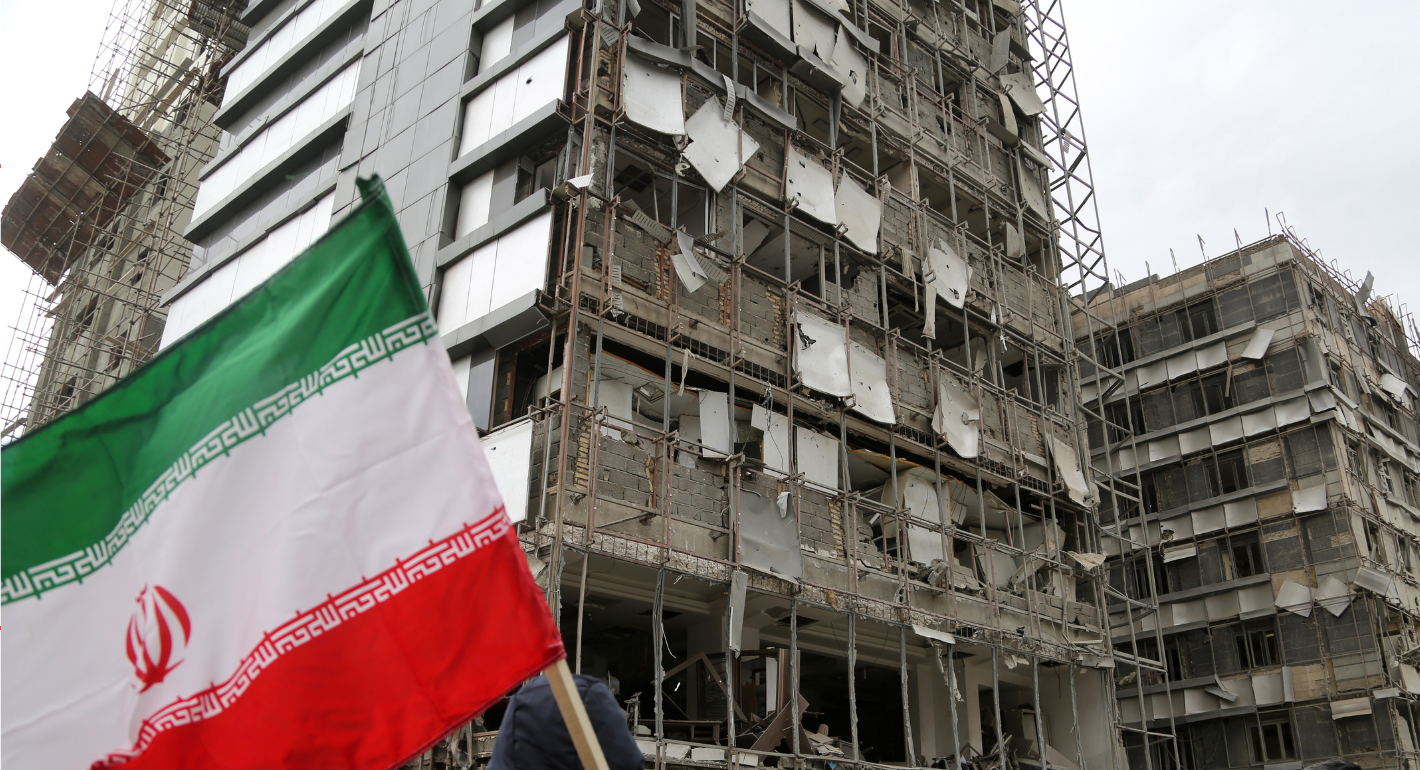
Europe’s reaction to the war in Iran has been disunited and meek, a far cry from its previously leading role in diplomacy with Tehran. To avoid being condemned to the sidelines while escalation continues, Brussels needs to stand up for international law.

Pierre Vimont
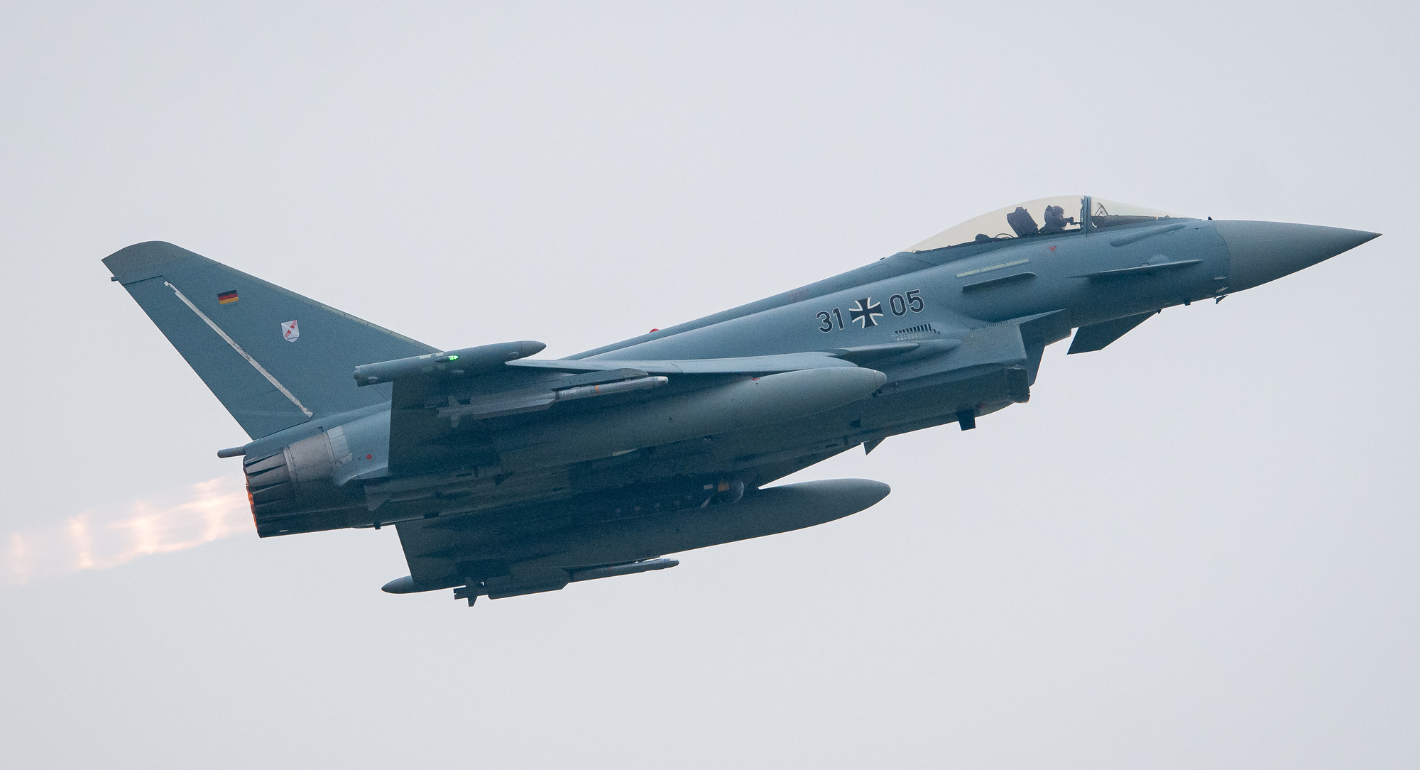
France and Germany’s failure to agree on the Future Combat Air System (FCAS) raises questions about European defense. Amid industrial rivalries and competing strategic cultures, what does the future of European military industrial projects look like?

Rym Momtaz, ed.
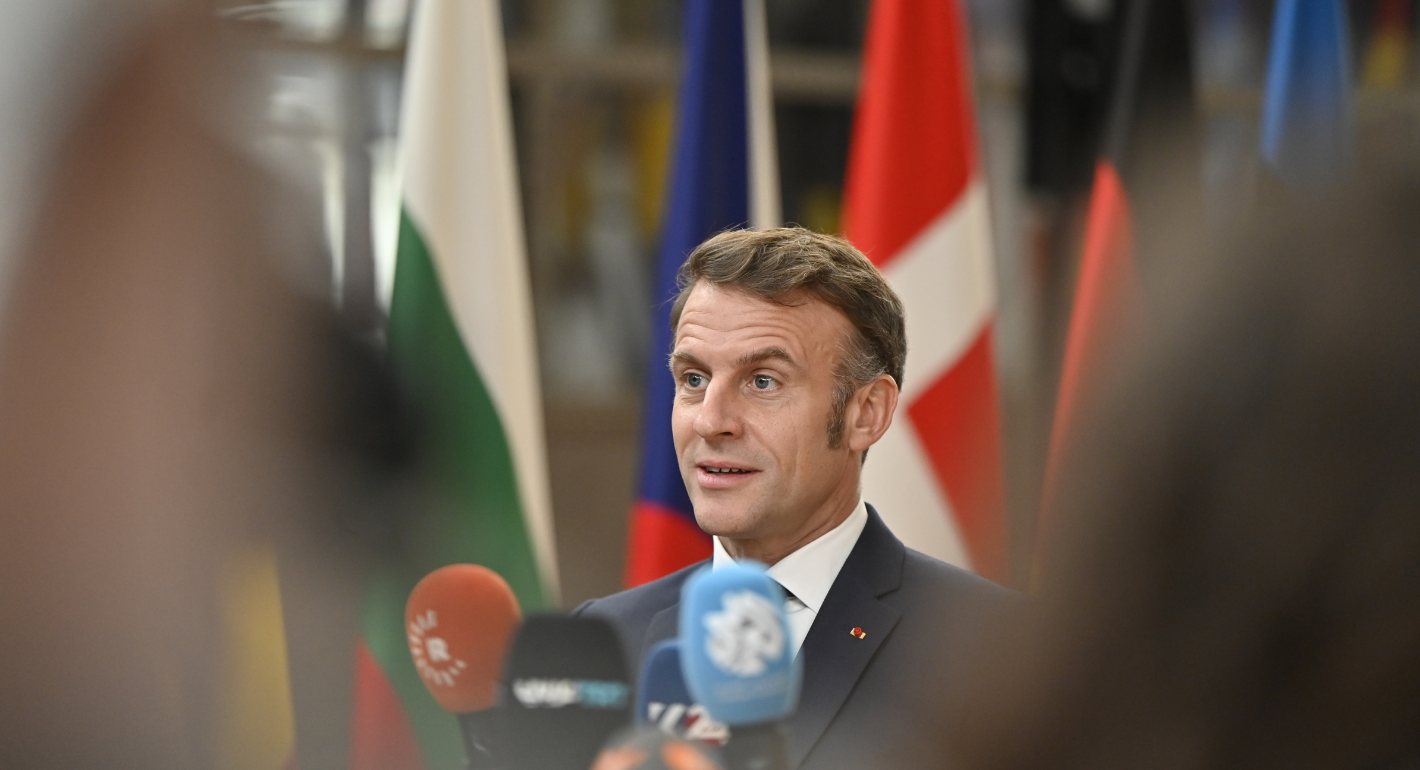
France has stopped clinging to notions of being a great power and is embracing the middle power moment. But Emmanuel Macron has his work cut out if he is to secure his country’s global standing before his term in office ends.
Rym Momtaz
Integrating AI into the workplace will increase job insecurity, fundamentally reshaping labor markets. To anticipate and manage this transition, the EU must build public trust, provide training infrastructures, and establish social protections.

Amanda Coakley
Europe’s interests in Syria extend beyond migration management, yet the EU trails behind other players in the country’s post-Assad reconstruction. To boost its influence in Damascus, the union must upgrade its commitment to ensuring regional stability.


Bianka Speidl, Hanga Horváth-Sántha