

Commentary
Syria’s worsening drought is no longer a seasonal crisis. This report explains what climate change is doing to rainfall, groundwater, and food security, and what solutions experts say are still possible.
Milia Esper
{
  "authors": [
    "Giorgio Cafiero",
    "Samuel Ramani"
  ],
  "type": "commentary",
  "blog": "Sada",
  "centerAffiliationAll": "",
  "centers": [
    "Carnegie Endowment for International Peace"
  ],
  "englishNewsletterAll": "",
  "nonEnglishNewsletterAll": "",
  "programAffiliation": "",
  "programs": [],
  "regions": [
    "Middle East",
    "Oman"
  ],
  "topics": [
    "Economy",
    "Trade",
    "Energy",
    "Security"
  ]
}
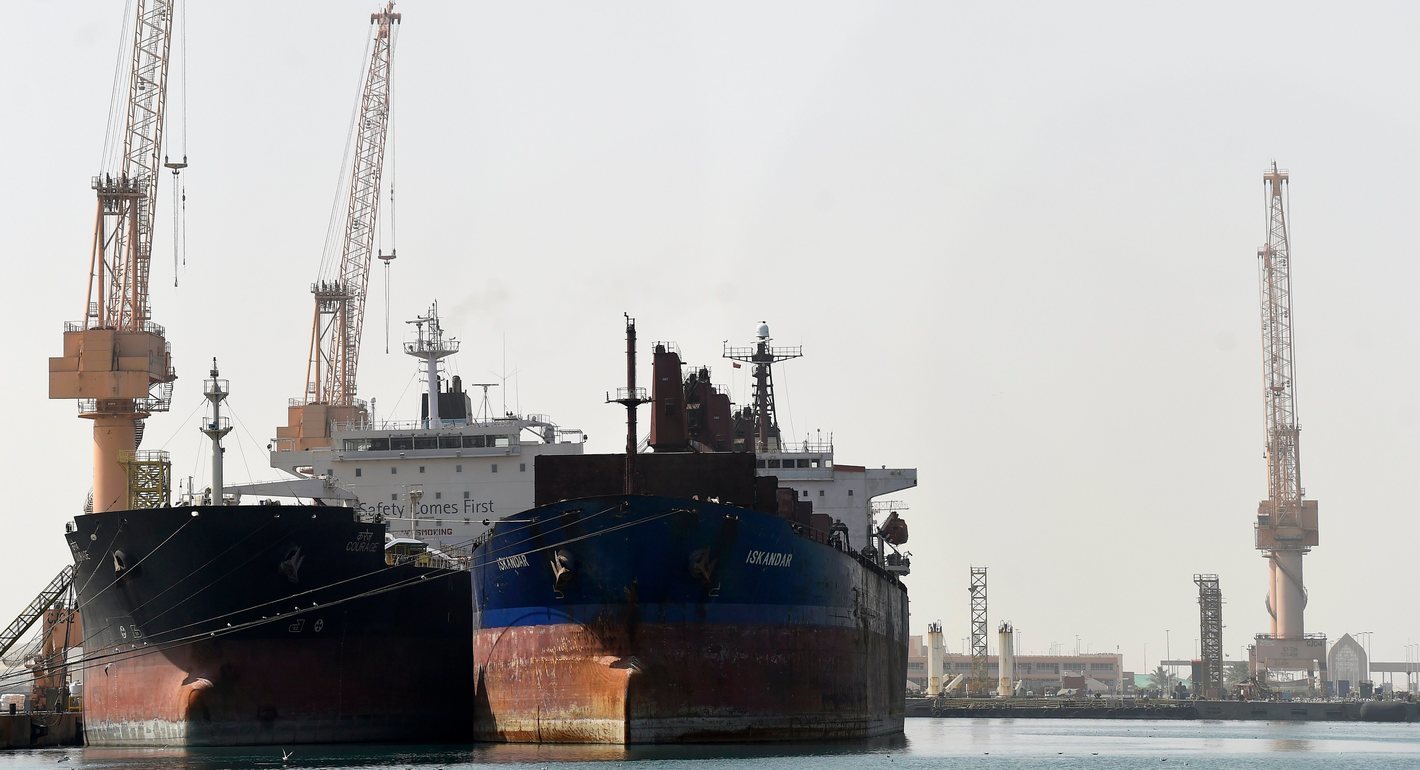
Source: Didier Lebrun / Photonews via Getty Images
In a volatile Middle East, the Omani port of Duqm offers stability, neutrality, and opportunity. Could this hidden port become the ultimate safe harbor for global trade?
Oman’s port of Duqm has been developed by the state as a strategically relevant but still evolving node in the Indian Ocean, reflecting a deliberate policy choice rather than market-driven port growth to reconfigure a once-remote coastal settlement into a multipurpose industrial and logistics site. Located outside the Middle East’s most volatile maritime chokepoints—the Strait of Hormuz and the Bab Al Mandab—Duqm is often described as offering relative geographic insulation from certain regional disruptions, while supporting Oman’s economic diversification goals under Vision 2040.
Recent events, including a military strike by Iran on Duqm amid the ongoing US–Iran war, have underscored the port’s strategic significance, highlighting both its vulnerabilities and the relative resilience of Oman’s infrastructure in a highly volatile regional environment. This reinforces Duqm’s role as a geopolitically neutral hub for risk-managed trade and regional logistics. Backed by growing foreign investment, expanding industrial infrastructure, and Muscat’s balanced foreign policy, Duqm has begun to integrate into regional trade, energy, and diplomatic networks, though its long-term positioning remains contingent on sustained policy execution, external demand, and investor confidence rather than geography alone. This raises a central question for policymakers and international investors alike: not whether Duqm can reshape global trade patterns, but whether it can function as a durable, geopolitically neutral platform that modestly enhances resilience and diversification in an increasingly volatile Middle East, and remains operational even under direct military threats.
Duqm’s emergence reflects deliberate state planning rather than organic port-led growth, distinguishing it from many regional infrastructure projects. Since the establishment of the Special Economic Zone at Duqm (SEZAD) in 2011, Oman has invested heavily in transforming what was once a remote fishing settlement into a multi-purpose industrial and logistics platform. Encompassing an area three times the size of Singapore, the zone integrates a deep-water commercial port, dry dock facilities, industrial land, and energy infrastructure under a single regulatory framework. This institutional consolidation is intended to reduce coordination failures, but it does not in itself guarantee commercial viability, investor confidence, or insulation from geopolitical shocks. As the recent Iranian strike showed, direct military threats can affect operations if not properly managed.
The state-led development model may reduce vulnerability to short-term political turnover, but it remains exposed to fiscal constraints, implementation bottlenecks, and long investment timelines.
The initial rationale for Duqm’s construction was derived from Sultan Qaboos’s recognition of Oman’s pressing need to reduce its reliance on oil and gas. Although Oman still produces one million barrels of oil per day and hydrocarbons constitute 70% of state revenues, it has officially been on the diversification track since it unveiled Vision 2020 in 1995. However, progress remained incremental for much of this period, with reform momentum accelerating only after Sultan Haitham bin Tariq assumed power in 2020.
These challenges encouraged Oman to unveil Vision 2040 in 2018, the Sultanate’s long-term effort to diversify its economy away from hydrocarbons while seeking to position itself as a neutral economic connector rather than a dominant trade hub between Asia, Africa, and the Middle East. Beyond its economic objectives, Vision 2040 also carries a distinct political logic aimed at preserving regime stability through institutional adaptation rather than political liberalization. The vision prioritizes administrative efficiency, fiscal discipline, and state capacity-building as mechanisms to manage social expectations in a post-oil environment. Rather than expanding participatory politics, Muscat has focused on recalibrating the relationship between the state and citizens by emphasizing service delivery, employment generation, and technocratic governance. In this context, projects like Duqm serve a dual function: they are instruments of economic diversification and tools for reinforcing political legitimacy by demonstrating planning capacity and risk management, including resilience against direct regional military threats, rather than by guaranteeing economic transformation.
As Vision 2040 implementation advanced, SEZAD became one of several connectivity-focused projects prioritized by the state, rather than a singular flagship. Although Duqm’s resident population and foreign investment presence have increased, available indicators suggest that the project remains in an early phase of integration into Indian Ocean trade networks, and it remains premature to characterize it as fully embedded within regional or global supply chains. As Oman leverages historical legacies to establish a renewed commercial presence in East Africa and strengthens regional air linkages via Rwanda, Duqm functions as a complementary infrastructure asset rather than a decisive driver of the Sultanate’s external economic ambitions. Oman’s concurrent expansion of aerial transit links to Singapore and its courtship of commercial ties with Southeast Asia are supported by Duqm’s maritime connectivity, but not dependent on it.
In light of the recent Iranian strike on Duqm during the U.S.–Iran war, it is clear that direct security risks can disrupt regional connectivity and port performance if risks are not carefully managed, highlighting the importance of security and risk management in evaluating Duqm’s ability to support foreign investment.
Leveraging its location and relative policy flexibility, Oman seeks to attract a wide array of international stakeholders, ranging from energy sector multinationals to advanced technology start-ups. However, Duqm should be understood less as a guaranteed investment destination and more as an ongoing policy experiment in state-led, non-oil development, with outcomes that remain uneven and highly contingent on sustained institutional coordination. In this context, SEZAD’s success will depend less on branding narratives and more on regulatory predictability, transparent business rules, infrastructure sequencing, and Oman’s ability to situate Duqm within a competitive regional economic environment. As such, Duqm is best understood not as a model to be replicated wholesale, but as a bounded case study in pragmatic, state-managed diversification within the Gulf.
While Duqm is often discussed primarily as a port project, its planners have consistently framed it as a multi-sector industrial zone rather than a shipping hub alone. In practice, this ambition has translated into the gradual development of energy, manufacturing, and logistics-adjacent industries intended to reduce reliance on port throughput as the sole measure of success. However, available evidence suggests that these sectoral expansions remain uneven, capital-intensive, and dependent on long-term external demand rather than immediate market pull.
Energy-related investments constitute the most visible pillar of Duqm’s non-maritime strategy. The zone hosts Oman’s largest refinery and has been positioned as a potential anchor for downstream petrochemicals, fuel storage, and export-oriented processing. More recently, policymakers have highlighted Duqm’s suitability for green hydrogen production, citing available land, proximity to export routes, and renewable energy potential. Yet these initiatives should be understood as prospective rather than operational at scale, with commercial viability contingent on global hydrogen pricing, regulatory clarity in importing markets, and the pace of technological cost reductions. As with similar projects across the Gulf, hydrogen development in Duqm currently reflects strategic signaling and option-building rather than guaranteed industrial transformation.
The recent Iranian strike on Duqm has demonstrated that direct security risks can impact emerging industrial, energy, and logistics sectors, highlighting that risk management and security are critical components of successful non-maritime diversification.
Manufacturing and heavy industry have also been identified as priority sectors, particularly in steel, construction materials, and industrial services linked to ship repair and offshore energy. The presence of dry dock facilities has enabled Duqm to capture a niche share of regional maintenance and repair activity. Still, this activity remains supplemental rather than dominant, constrained by competition from established hubs in the UAE and Saudi Arabia, as well as by workforce availability and supply-chain depth. Rather than displacing existing centers, Duqm’s industrial role is better characterized as additive, absorbing overflow capacity and serving specific risk-averse operators.
Logistics and warehousing development has proceeded in parallel, supported by road connectivity to Oman’s interior and the Gulf Cooperation Council market. Nonetheless, Duqm’s overland connectivity remains less mature than its maritime infrastructure, limiting its ability to function as a full-scale logistics redistribution center. This has reinforced Duqm’s current positioning as a point of origin or destination for specialized cargo, rather than a high-volume transshipment hub. Taken together, these sectoral dynamics suggest that Duqm’s diversification strategy is incremental and portfolio-based, emphasizing resilience and optionality over rapid scale or market dominance.
Duqm’s development cannot be separated from Oman’s long-standing foreign policy doctrine, which emphasizes neutrality, de-escalation, and balanced engagement with competing powers. This diplomatic posture has often been cited as a comparative advantage for the port, particularly in a region marked by military confrontation and sanctions regimes. In practice, however, neutrality should be understood less as insulation from geopolitical pressure and more as a governance strategy that requires continuous calibration and enforcement.
From the outset, Oman sought to attract a diversified pool of foreign capital to Duqm, including investors from China, Europe, the Gulf, and South Asia. Early announcements surrounding Chinese involvement, particularly through the China–Oman Industrial Park, generated significant attention. Yet the gap between initial investment pledges and realized capital inflows highlights the limits of politically driven infrastructure signaling. Several Chinese projects were delayed, downsized, or quietly shelved, reflecting commercial constraints rather than diplomatic friction. This outcome underscores a broader pattern in which Oman has demonstrated a willingness to absorb opportunity costs in order to preserve regulatory autonomy and avoid overdependence on any single external actor.
A similar logic has shaped Oman’s approach to sanctioned actors. While Muscat maintains diplomatic channels with Iran and Russia, Duqm has not emerged as a platform for circumventing international sanctions. Reports of heightened due diligence, compliance screening, and the exclusion of sanctioned entities from port-related activities suggest that Oman has drawn clear operational boundaries between diplomatic openness and commercial permissibility. This distinction, while constraining short-term capital inflows, enhances Duqm’s credibility with Western and Asian investors who prioritize compliance and reputational risk management.
Taken together, these dynamics indicate that Duqm’s geopolitical significance derives primarily from Oman’s deliberate regulatory and political choices, rather than from external demand alone. The Iranian strike on Duqm during the U.S.–Iran war underscored that this significance is no longer abstract or location-based, but increasingly tied to Oman’s ability to manage direct exposure to risk while sustaining its balanced foreign policy posture. The port’s neutrality is not a passive condition, but an actively maintained practice requiring sustained policy discipline, institutional shock absorption, and the capacity to prevent security incidents from triggering forced geopolitical or commercial alignments, alongside a willingness to trade rapid expansion for long-term strategic credibility.
Duqm may not yet be widely recognized, but in a region often defined by conflict and volatility, it exemplifies a policy-driven effort to manage risk rather than a guaranteed success story. By leveraging a strategic location outside the Strait of Hormuz and Bab Al Mandab, Muscat’s measured foreign policy, and Vision 2040’s emphasis on economic diversification, Duqm has the potential to function as a supplementary node within global trade networks, rather than as a transformative hub. The relevant question, therefore, is not whether Duqm will grow in absolute terms, but whether it can incrementally influence how trade is routed under conditions of geopolitical stress. To do so, Oman must continue integrating the port into global supply chains by linking its industrial, energy, and logistics assets with credible, long-term partnerships grounded in commercial demand rather than strategic aspiration. Prioritizing sectors that combine economic viability with strategic relevance, such as green hydrogen, low-carbon industrial inputs, and resilient shipping corridors, may strengthen Duqm’s role for a narrow but consequential set of users, without overextending state capacity.
At the same time, Oman’s diplomatic posture and its self-described “friends-of-all” orientation contribute to operational stability during periods of regional crisis, though this stability is actively maintained rather than structurally guaranteed. By combining strategic patience, multipolar investment outreach, and technocratic governance, Duqm can support Oman’s broader risk-mitigation strategy, even if it falls short of altering regional trade hierarchies. In this sense, Duqm’s significance lies less in moving large volumes of goods than in demonstrating how middle powers can pursue economic diversification while preserving political autonomy in a polarized regional environment.
Evidence from Duqm’s first decade of operation suggests that it is developing into a durable and geopolitically neutral hub in functional, rather than transformative, terms. The diversification of investors across Europe, Asia, and the Gulf—combined with the absence of dominant capital from any single great power—indicates that Duqm has thus far avoided the political capture that has constrained comparable projects elsewhere. The limited realization of early Chinese investment pledges, the enforcement of compliance redlines on sanctioned Russian entities, and the absence of Iranian commercial activity despite diplomatic engagement collectively indicate that Oman has prioritized regulatory and strategic autonomy over rapid scale. This autonomy, rather than throughput or headline investment figures, constitutes the most credible evidence that Duqm can sustain neutrality while remaining open to global capital.
At the same time, available indicators suggest that Duqm’s capacity to reshape global trade patterns will remain indirect, conditional, and context-dependent. While cargo volumes and industrial output remain modest compared to established Gulf ports, Duqm’s selective integration into emerging hydrogen corridors, low-carbon manufacturing initiatives, and diversified energy logistics points to a role in reconfiguring risk-sensitive segments of global supply chains. In practical terms, this means Duqm is more likely to influence trade routing during periods of heightened geopolitical tension—by offering continuity outside contested chokepoints—than to redirect flows in stable conditions. The evidence, therefore, supports a narrow but defensible conclusion: Duqm enhances resilience and optionality within the existing global trade architecture, without fundamentally redistributing it.
Giorgio Cafiero
Giorgio Cafiero is the CEO of Gulf State Analytics, a Washington, DC-based geopolitical risk consultancy. He is also an adjunct assistant professor at Georgetown University and an adjunct fellow at the American Security Project.
Samuel Ramani
Samuel Ramani is an associate fellow at the Royal United Services Institute (RUSI) think tank in London and the CEO of Pangea Geopolitical Risk.
Syria’s worsening drought is no longer a seasonal crisis. This report explains what climate change is doing to rainfall, groundwater, and food security, and what solutions experts say are still possible.
Milia Esper
From anime heroes to online gaming communities, Morocco’s Gen Z is building a new protest culture. What does this digital imagination reveal about youth politics, and how should institutions respond?
Abdelilah Farah
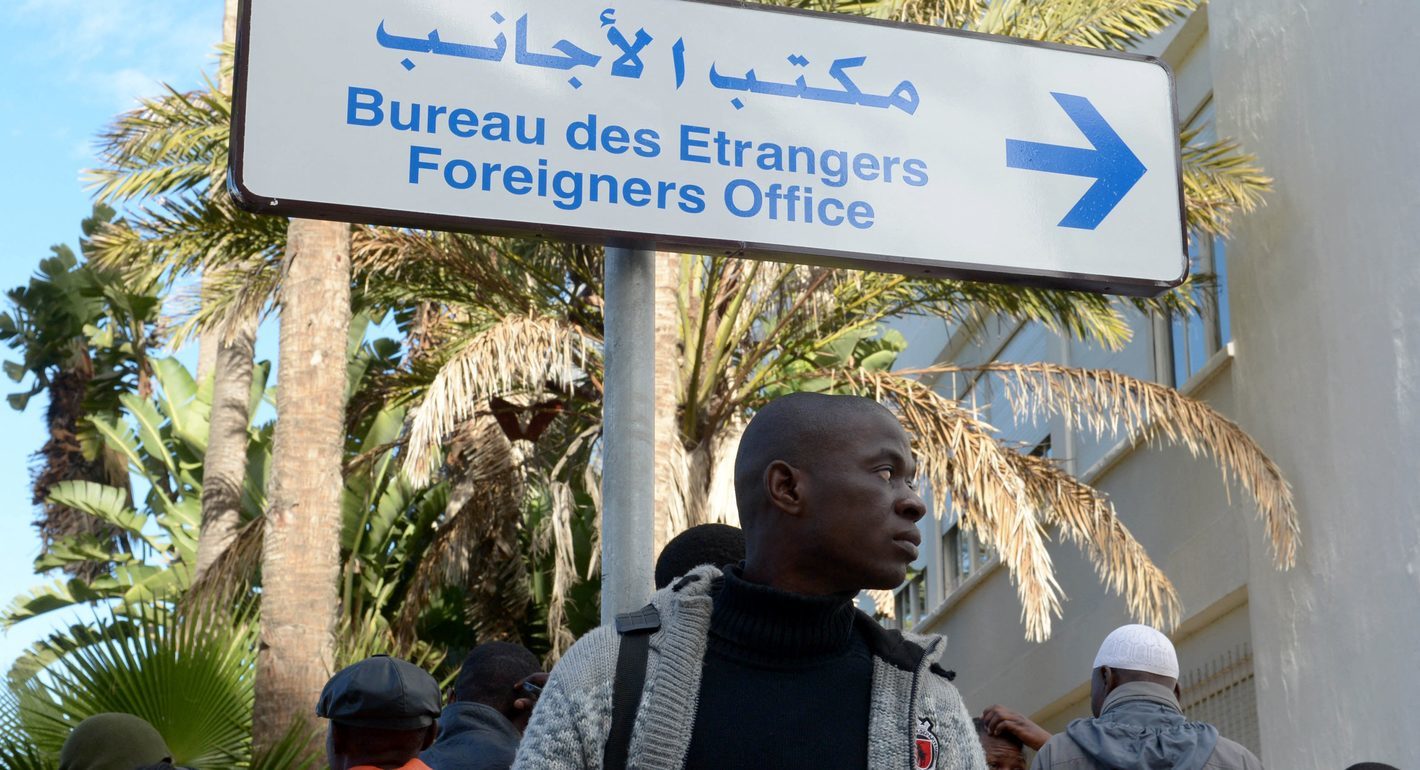
Is Morocco’s migration policy protecting Sub-Saharan African migrants or managing them for political and security ends? This article unpacks the gaps, the risks, and the paths toward real rights-based integration.
Soufiane Elgoumri
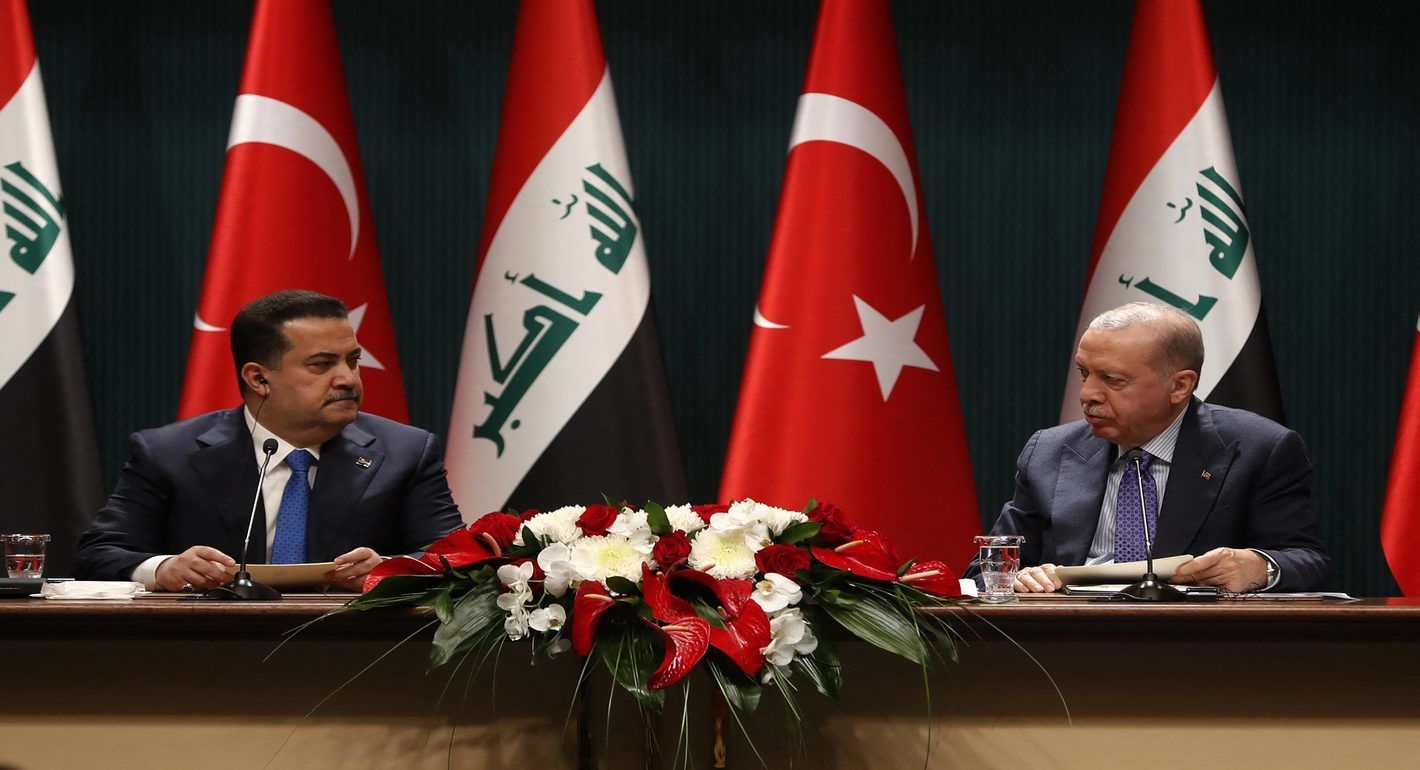
Iraq’s foreign policy is being shaped by its own internal battles—fractured elites, competing militias, and a state struggling to speak with one voice. The article asks: How do these divisions affect Iraq’s ability to balance between the U.S. and Iran? Can Baghdad use its “good neighbor” approach to reduce regional tensions? And what will it take for Iraq to turn regional investments into real stability at home? It explores potential solutions, including strengthening state institutions, curbing rogue militias, improving governance, and using regional partnerships to address core economic and security weaknesses so Iraq can finally build a unified and sustainable foreign policy.
Mike Fleet
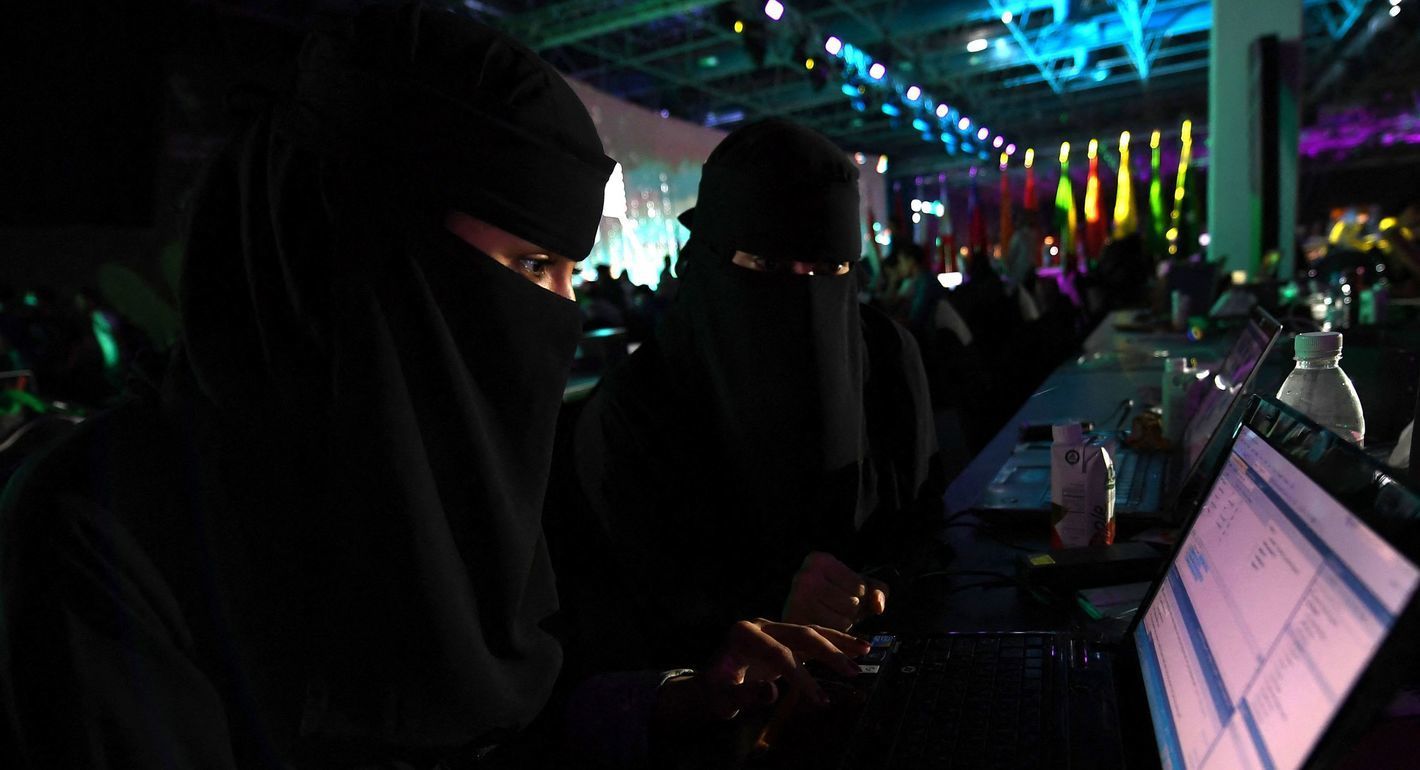
How can Saudi Arabia turn its booming e-commerce sector into a real engine of economic empowerment for women amid persistent gaps in capital access, digital training, and workplace inclusion? This piece explores the policy fixes, from data-center integration to gender-responsive regulation, that could unlock women’s full potential in the kingdom’s digital economy.
Hannan Hussain