

Commentary
The issue is not that the president only has selective information at his disposal, but that the decision-making process consists of one person with an unshakeable vision of how the world works.
Tatiana Stanovaya
{
  "authors": [
    "Alexander Atasuntsev"
  ],
  "type": "commentary",
  "blog": "Carnegie Politika",
  "centerAffiliationAll": "",
  "centers": [
    "Carnegie Endowment for International Peace",
    "Carnegie Russia Eurasia Center"
  ],
  "englishNewsletterAll": "",
  "nonEnglishNewsletterAll": "",
  "primaryCenter": "Carnegie Russia Eurasia Center",
  "programAffiliation": "",
  "regions": [
    "Russia",
    "Armenia",
    "Caucasus"
  ],
  "topics": [
    "Global Governance",
    "Political Reform"
  ]
}
Source: Getty
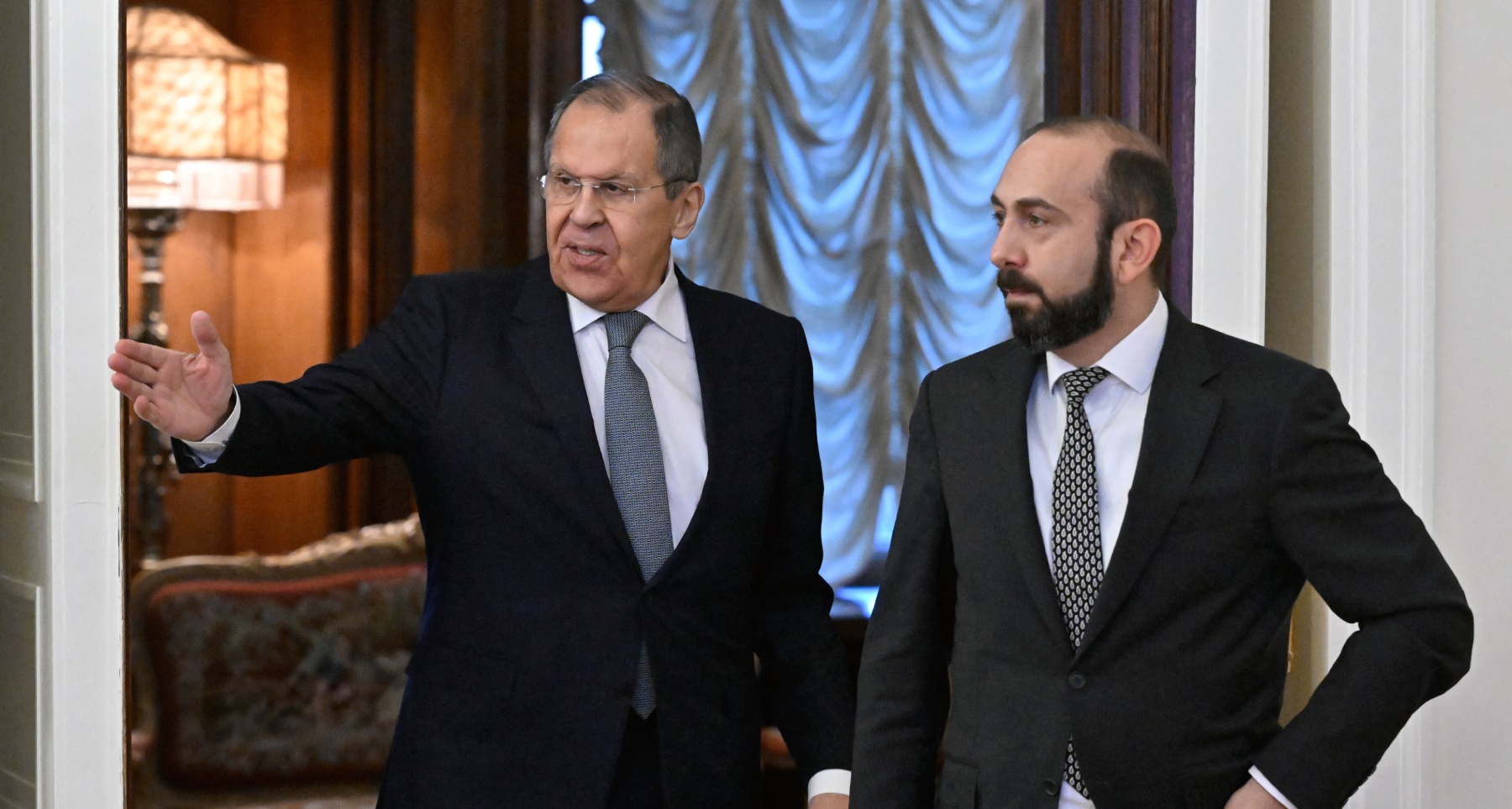
For all the menacing rhetoric, the Armenian prime minister remains a leader with whom Putin is prepared to interact: not as an ally, but as a partner, albeit a problematic one.
The convincing victory of Nikol Pashinyan’s Civil Contract party in Armenia’s recent parliamentary elections looks like the latest in a series of geopolitical failures for Russia. Yet another post-Soviet country has voted to turn away from the Kremlin and embark on a pro-Western course, despite intense pressure from Moscow.
Still, the extent of Russia’s defeat should not be exaggerated. In the run-up to the election, Moscow avoided burning bridges entirely with Pashinyan by only using some of the levers of influence over Yerevan at its disposal—and far from the most deadly ones. That proved enough to ensure that pro-Russian parties got the best result since the 2018 Velvet Revolution that brought Pashinyan to power. The prime minister understands how difficult the Kremlin could make life for him, and said he would go to Russia once the election was over.
With Pashinyan’s victory, Armenia’s slow drift toward Europe will continue, but is unlikely to lead to a break in relations with Russia: there are too many benefits of cooperation for both countries.
Russia’s pre-election pressure on Armenia had at least two aims. First, by banning various Armenian imports, Moscow wanted to make Armenian voters fear the consequences of losing the Russian market, thereby garnering support for the pro-Russian parties. It’s no coincidence that most of the imports in question were Armenian agricultural produce: the measure was designed to primarily impact provincial voters employed in agriculture, among whom Pashinyan is more popular than among city-dwellers.
Russia’s second and more long-term aim was to directly influence Pashinyan. To this end, Moscow threatened to suspend the gas agreement between the two countries if Armenia continues its EU integration, and the countries of the Eurasian Economic Union (EAEU) issued a joint statement calling for Armenia to hold a referendum on joining the European Union.
By making this latter demand a collective one, Moscow was trying to make out that its concern was more economic than political, and that not only Moscow but the entire EAEU wanted Yerevan to make up its mind. In addition, the discussion of the referendum was intended by the Kremlin to show that Pashinyan’s rhetoric of EU integration was deceiving voters with vague promises of advantages without fully informing them of the risks and downsides. Even in Moldova, which is far more closely integrated with the EU, a similar referendum in 2024 only resulted in a very narrow win in favor of the EU, so the Kremlin had every reason to hope that such a vote in Armenia would fail.
Despite Moscow’s ostentatious bans and demands, the banned goods only make up a few percent of Armenian exports. They will be felt by individual industries, such as producers of flowers and fruit and vegetables, where nearly all exports go to the Russian market, but will not mean major overall losses for Yerevan.
Moscow could, of course, continue to ramp up the pressure now that the election is over: it has plenty of tools to do so at its disposal. But it’s unclear what that would give Moscow, and despite the asymmetry in the relationship, Yerevan could still hit back.
Turning the screws on Yerevan would not only push it further toward the EU, but also toward Turkiye, which is increasingly competing with Russia for influence in the South Caucasus. At the beginning of June, when Moscow was bombarding Armenia with bans and threats, Pashinyan spoke not only with his EU allies, but also with Turkish President Recep Tayyip Erdoğan. They discussed the launch of direct trade, with borders expected to open after the signing of a peace treaty between Yerevan and Baku.
Russia also benefits directly from economic cooperation with Armenia. Since 2022, the South Caucasus country has become a transshipment hub for sanctioned Western goods that the Russian economy desperately needs.
From the pre-war year of 2021 to the end of 2025, Armenian exports to Russia quadrupled from $840 million to almost $3 billion. That growth was primarily fueled by the re-export of Western goods. In 2025, Armenia sent almost $1 billion worth of electronics to Russia, compared with just $12 million in 2021.
Yerevan also has its own political cards to play. Pashinyan could, for example, announce Armenia’s withdrawal from the Collective Security Treaty Organization (CSTO). Anyway, Russia stopped selling arms to Armenia several years ago.
Western sanctions have made Armenia a valued partner for Russian companies in other areas, too. In 2024, billions of dollars’ worth of gold was re-exported via Armenia, before the scheme was exposed and shut down. Then there is the banking sector: if money from Russia didn’t reach its recipients via Armenian banks, then there would not be such a roaring trade in imports via Armenia.
Now that the election is over, there is little point in Russia doubling down on the restrictions it has introduced against Armenia. In the long run, they will do more harm than good. Even in the few weeks they have been in force, the impact has been negative. The EU announced that it would allocate financial assistance to Yerevan as well as temporarily exempting Armenian fruit and vegetables from import duty. In terms of image, this certainly looked better than Moscow’s threats, and only boosted the pro-EU camp.
Moscow has already restricted imports from Armenia on more than one occasion—including Armenian cognac in both 2023 and 2024—but then lifted the bans. There is every indication that this time will be no different.
In any case, the Kremlin has new levers of influence over Yerevan following the election. The pro-Russian opposition has increased its representation in the Armenian parliament, and for the first time since coming to power in 2018, Pashinyan’s party does not have a constitutional majority. Without supporting votes from the opposition, the Armenian government will not be able to hold a referendum on changing the constitution, and that is the final obstacle in the path to signing a peace agreement with Azerbaijan.
Pashinyan himself is well aware of the need to reduce tensions in relations with Russia—hence his announcement on the eve of the election that he would head to Moscow immediately afterward to “resolve all the current issues.”
The Kremlin looks set to welcome him. For all the menacing rhetoric, the Armenian prime minister remains a leader with whom Putin is prepared to interact: not as an ally, but as a partner, albeit a problematic one.
That doesn’t mean that relations between Yerevan and Moscow will be plain sailing from now on. Armenia’s drift toward the West looks irreversible. According to a May poll by the International Republican Institute, 75 percent of Armenians are in favor of EU integration. But for now, most people also believe that relations with Brussels should not be developed to the detriment of the partnership with Russia, which makes reducing tensions an attractive proposition for both sides.

Alexander Atasuntsev
Independent journalist
Carnegie does not take institutional positions on public policy issues; the views represented herein are those of the author(s) and do not necessarily reflect the views of Carnegie, its staff, or its trustees.
The issue is not that the president only has selective information at his disposal, but that the decision-making process consists of one person with an unshakeable vision of how the world works.

Tatiana Stanovaya

By fueling the arguments of both supporters and opponents of Armenian Prime Minister Nikol Pashinyan, Azerbaijan wants to ensure he is re-elected with a weaker mandate.

Bashir Kitachaev
A much-discussed disagreement over internet restrictions in Russia was never an existential threat for Putin: It was about elite groups protecting their interests.

Alexandra Prokopenko
By reminding the world that Lukashenko is a threat to NATO and Ukraine, Kyiv is trying to return the focus to why the Belarusian regime needs to be contained rather than rewarded.

Artyom Shraibman

The demands of the Kremlin’s war in Ukraine, demographic problems, and public hostility toward Central Asians mean Russia does not have enough workers.

Salavat Abylkalikov