Article
Miles Kahler
Source: Getty
Alternatives to the major powers must play a larger role, no matter if the aim is preservation of the existing global order, reform of its institutions, or transformation into a new model of governance.
In the face of today’s disruption of long-established global institutions and norms, it may seem quixotic to assess global governance and predict its future. The globe will be governed, however—whether by self-interested and unconstrained major powers, reshaped legacy institutions, or new coalitions and organizations that have yet to take shape. Taking stock of defects in the global architecture is a first step toward explaining the current disarray. Despite post–Cold War optimism, critics and reformers have identified long-standing defects in global governance. In this institutional landscape, which already faced challenges, major power rivalry and defection have interacted with globalization to produce both heightened uncertainty and persistent resilience, a world of both shocks to the old order and continued integration that serves as a fragile ballast for that order. Any restored, reformed, or new order, if it emerges, will be manufactured by middle power cooperation and initiatives, devolution to regional institutions, or mobilization by transgovernmental networks (TGNs), private corporations, and nongovernmental organizations (NGOs)—alone or in combination. The new order’s liberalism, if it remains infused with liberal norms, will replicate the current tension between a universalist liberal vision and one based on diversity and self-determination.
The existing global order was under stress before the most recent shocks to its foundations. None of these stressors is new; even disruption and disregard for global institutions and norms by major powers precedes the last decade.1
Multilateralism with large numbers. Global forums face a crisis of effectiveness and efficiency; gridlock too often seems to be its product.2 Many governments demand large-number forums to avoid conceding critical governance decisions to an oligarchy of powerful states. Unfortunately, reliance on consensus decisionmaking has produced delays and deadlock; any implementation of collective decisions, when they are reached, is often deficient. The failure of the Doha round of World Trade Organization (WTO) negotiations and the lengthy negotiations required to complete a pandemic preparedness treaty are only two examples.3
Failure to mirror global shifts in economic weight. New influentials, such as the BRICS group, have demanded reforms that would shift power in major international organizations away from the industrialized incumbents. Such changes in formal intergovernmental organizations have occurred slowly and incrementally, since a gain in one country’s influence typically represents a loss for another.4 Shifts in organizational influence could take place more rapidly if the new influentials coordinated, for example, in selecting the leadership of the International Monetary Fund (IMF) and the World Bank, currently awarded by convention to Europe and the United States, respectively.5
Innovation versus mission creep. Despite periodic reinvention, the existing architecture of global governance often seems a poor fit for a changing global agenda, a deficiency underscored during the COVID-19 pandemic. On the other hand, when global institutions expand their agendas to include new issues, such as climate change or gender equality, they are criticized for lack of competence and unwarranted mission creep.
New actors: complexity, accountability, and efficiency. Increased, unmet demand placed on the intergovernmental core of global governance has been met by the mobilization of new actors (TGNs, international corporations, NGOs, foundations) linked together with national governments in new, complex formats of governance. In global health, for example, new forms of collective action (alliances, forums, and public-private partnerships) have combined powerful private actors, such as the Gates Foundation and pharmaceutical multinational corporations, with intergovernmental organizations (such as the World Health Organization), national agencies (such as the Centers for Disease Control and Prevention), and international NGOs. Despite successes, these new informal governance complexes have risked replicating the shortcomings of formal institutions: cumbersome decisionmaking, privileged influence for the wealthiest actors, and rapidly expanding, unwieldy agendas.
These shortcomings powered criticism and political opposition, but they did not threaten an immediate rupture in global governance. The collective response to the global financial crisis of 2008–2009 seemed to confirm existing institutions (IMF, World Bank, network of central banks) and innovations (revival of the Group of 20) as robust instruments for collective action. Even at that moment of apparent success, however, the reemergence of rivalry among major powers could be detected. Russian President Vladimir Putin’s speech at the Munich Security Conference in February 2007 signaled a nationalist and assertive turn in Russian foreign policy.6 China used the Beijing Olympics in 2008 as a showcase for its economic and political rise. Nationalist counters to the prevailing global order and to the U.S. military interventions in Iraq and Afghanistan would become coupled to regimes of a particular type, amplifying their disruptive effects on global order.
For realists, the reappearance of military competition and rivalry among the major powers simply confirms a constant in international relations. However, the timing of its reappearance is closely linked to the emergence of regimes centered on strongman leaders that amplified its effects. More important than whether the world is unipolar, bipolar, or multipolar are three domestically driven features of major power competition and conflict: nationalist programs that undermine transnational ideological appeal, strongman regimes that centralize authority over foreign policy, and foreign policy processes that favor cliques or camarillas loyal to the leader.
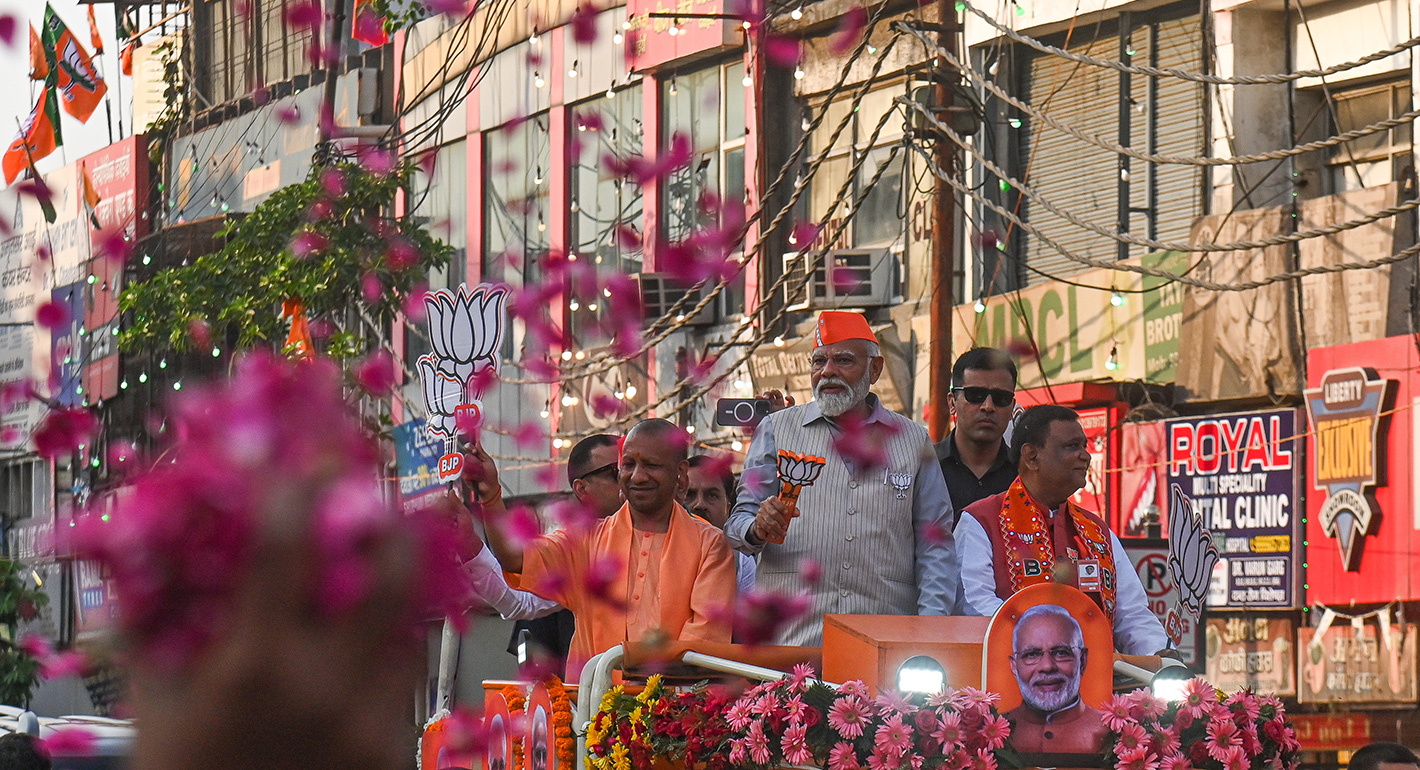
The leaders of China, Russia, and the United States—as well as other countries, such as Türkiye and India—have embraced nationalist programs that look to an idealized past for their appeal.7 Whether a greater Russia (or the former Soviet Union), a China of past grandeur before its “century of humiliation,” or an appeal to “Make America Great Again” that evokes a past United States of ethnic and religious homogeneity, the world has moved far from Cold War ideological competition and its transnational appeals.8 Shallow alliances among nationalists do not match the ties between communist parties in the Soviet bloc or past efforts by the United States to promote alliances based on liberal democracy, despite support from U.S. President Donald Trump’s administration and Russia for former Hungarian prime minister Viktor Orbán and other far-right European parties. That sponsorship has been complicated since the start of the Iran war, as right-wing European allies of the Trump administration have distanced themselves from the United States and a war that is unpopular with their supporters.
Adoption of nationalist appeals and programs by major powers has in turn led to breaches of international norms and distancing from multilateral institutions, which nationalists regard as constraints on national power rather than instruments for amplifying that power. Erosion of post-1945 foundational norms—political autonomy and territorial integrity, which are embedded in both international law and the United Nations (UN) charter—is striking.9 Russia’s invasions of Ukraine in 2014 and 2022 have been overt violations. China persists in its South China Sea claims despite legal rebukes and has offered economic support for Putin’s Ukraine aggression. Trump has mused about seizing the Panama Canal, threatened a takeover of Greenland, and has attacked Iran twice without the support of the United Nations or traditional allies. This resurgence of national interest defined as territorial acquisition underscores the uneasy coexistence of a global territorial order and liberal international norms.10
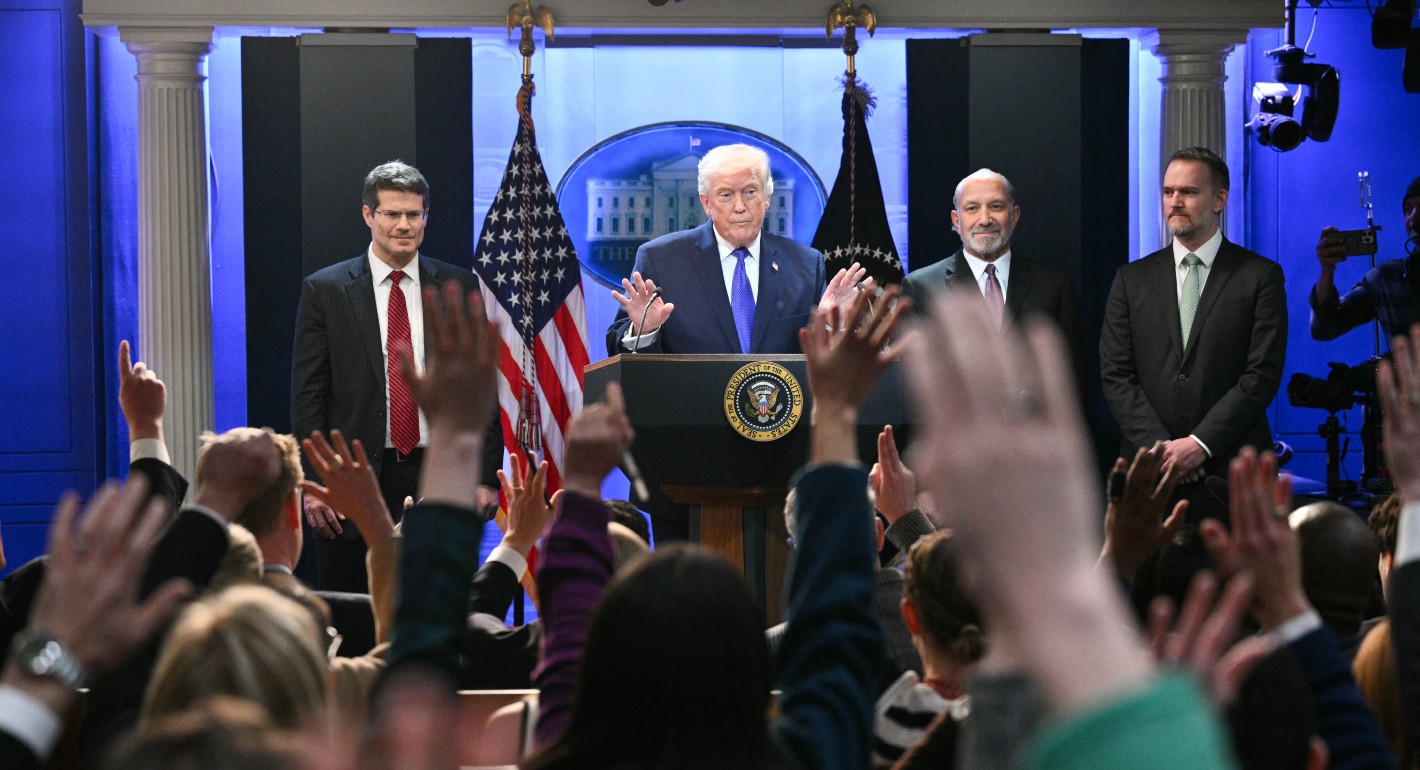
These nationalist programs are advanced by leaders of a particular type, labeled “strongmen,” who centralize power in their persons and override domestic political constraints.11 Their emergence spans both authoritarian regimes and backsliding democracies. Elizabeth Saunders has captured this similarity in her description of the second Trump administration: “In matters of foreign policy and national security, the presidency now has the characteristics of a personalist dictatorship.”12
Their nationalist programs are also portrayed as “anti-system,” justifying an assault on established institutions, adding populist appeal, and connecting them to a wider political constituency. Labeling Chinese President Xi Jinping and Vladimir Putin as anti-system may at first glance seem improbable. Xi is a “princeling,” a second-generation member of the Communist Party elite. Putin is a product of the KGB, a Soviet organization that reproduced its remit in Russia as the Federal Security Service (FSB) and the SVR (Foreign Intelligence Service). Nevertheless, both Xi and Putin have viewed political and cultural developments in their countries as threats to national power and their own positions.
Xi believes China’s previous years of engagement with the United States and its allies produced a slackening of party control and corruption that diminished its legitimacy and threatened its future. For Putin, political chaos and economic disarray following the Soviet dissolution—which he described as “a major geopolitical catastrophe of the century”—represented threats to the Russian nation that had to be reversed.13 Xi Jinping attacked the system as he found it by dismantling collective authoritarian rule through successive anti-corruption purges, a deepening of repression and social surveillance, and the elimination of term limits on his rule. The purges have continued and have been extended to central institutions, such as the party elite and, most recently, the military leadership.14
In autocratic cases, such as Russia and China, repression is evident and consistent. This syndrome of centralizing personalist rule and nationalist, anti-system ideology has also extended beyond the major powers to Türkiye (Recip Tayyip Erdoğan), Brazil (Jair Bolsonaro), Hungary (Viktor Orbán), and India (Narendra Modi). Anti-system leaders in backsliding democracies and competitive authoritarian regimes also aim to eliminate or weaken limits on their power. Their definitions of “the system” may vary, as they champion the nation or the people, but they share the instruments of “spin dictators,” including mastery of information networks and social media.15
The third characteristic of strongman regimes follows from their anti-system bias: distrust of national bureaucracies and their embedded expertise. These leaders often conduct foreign policy with the assistance of camarillas, circles of loyalists who often lack formal government or bureaucratic positions.16 In his first presidential administration, Trump populated several of his senior foreign policy positions with individuals whose international credibility exceeded his own. Members of this “shallow state” who resisted his directives did not last; after clashes with the president, they often left after relatively brief tenures.17 In his second administration, a more confident Trump has dispensed with an experienced shallow state, embedding committed loyalists in both senior and subordinate positions. Putin’s camarilla consists of an inner circle of siloviki—old friends, colleagues from the KGB and FSB, and trusted military advisers—a circle that became even smaller during the COVID-19 pandemic. Similarly, after taking power in 2012, “Xi has packed the leadership with loyalists, sidelined subordinates who owed their rise to predecessors and even cashiered some of his own protégés.”18
The so-called deep state that is circumvented by the leader’s inner circle is also a reservoir of expertise and transnational connections that sustain global governance.
The rise of camarillas around personalist leaders has three important consequences for foreign policy and the global institutional order. First, internal bureaucratic constraints on the leader are removed as leaders seek to weaken or eliminate international obstacles to their nationalist programs. The so-called deep state that is circumvented by the leader’s inner circle is also a reservoir of expertise and transnational connections that sustain global governance. Second, power centralized in a leader without typical bureaucratic constraints, when coupled with personal and political preferences for overturning the status quo, produces volatility and uncertainty, dramatically reducing the credibility of international commitments and further undermining international law and norms. Finally, members of a camarilla selected by the leader and entirely dependent on the leader for their political prospects have powerful incentives to provide only information that matches the leader’s preferences and reinforces his worldview. As Jude Blanchette describes for the case of China, the small circle of advisers “acts as the leader’s window to the world, leaving much dependent on how accurate a depiction of external reality its members choose to provide.”19 Such information bubbles lead to miscalculation by misreading the intentions of other governments and undermine the trust that sustains international collaboration.
These three political developments in the major powers point to potentially risky and unpredictable behavior, based on a handful of leaders and their beliefs. Predisposed by their nationalist programs to reject the constraints imposed by international institutions or law, few additional domestic constraints are imposed by party, bureaucracy, or advisers.20 Entrenched personalist leaders may have greater latitude to choose high-risk options that are difficult to predict.21 The prospects for conflict based on miscalculation due to information deficits rise.22 The 2022 invasion of Ukraine by Russia and recent actions and counter-actions to escalate trade conflict by the U.S. and Chinese governments resulted from deeply held beliefs of the leaders (such as Putin’s claim to a “greater Russia,” and Trump's belief that “trade wars are good, and easy to win”) as well as miscalculation regarding the capabilities of their opponents.23 Early accounts of the Trump administration’s decision to initiate the Iran war reflect this syndrome: Even initial skeptics “deferred to the president’s instincts, including his abundant confidence that the war would be quick and decisive.”24 These decisions also demonstrate two additional results of such leadership: lower credibility and higher uncertainty, with negative consequences for global order.
If the major powers (and many lesser powers) have increased uncertainty and conflict that undermines global order, a second structural feature, globalization—the integration of international markets in goods and services, capital, and labor—has demonstrated resilience. In the wake of successive shocks—the terrorist attacks of 9/11, subsequent wars in Iraq and Afghanistan, the global financial crisis, Russia’s invasions of Ukraine, and the COVID-19 pandemic—many proclaimed globalization’s demise. Instead, the pace and characteristics of globalization have slowed, but large-scale retreat has not occurred.
In the wake of successive shocks, many proclaimed globalization’s demise. The pace and characteristics of globalization have slowed, but large-scale retreat has not occurred.
The global financial crisis marked a turning point in financial globalization, as the bubble of asset inflation abruptly burst, but that shift did not produce a widespread retreat from capital market integration or foreign direct investment. Coincident with the crisis, two decades of hyperglobalization in trade (1990–2010) appeared to close.25 Rather than an overall “slowbalization,” however, global economic integration shifted its composition, with cross-border flows of intangibles, such as intellectual property, services, and people, especially students, driving it forward.26 Setbacks, such as the COVID-19 pandemic, were temporary and demonstrated the ability of global supply chains to reconfigure rapidly in response to the shock. Even the current trade war—or tariff war—initiated by the Trump administration has had more limited effects than had been predicted on “liberation day” in April 2025.27 The United States represents a smaller share of global trade than many in the country believe, especially in manufacturing, and most trade disruption has been focused on U.S.-China bilateral trade. Also, in contrast to the 1930s, the rest of the world, rather than following the United States into a competitive round of protectionism, has accelerated new trade agreements.28
Despite the resilience of the world economy, major power rivalry has influenced globalization—and has been influenced by it—in several important ways. Nationalist programs have increased attention to economic security, already encouraged by supply-chain risks revealed during the COVID-19 pandemic. In the name of national security, state intervention in trade and investment has chipped away at the liberalization of cross-border flows. Globalization has also provided governments with new instruments for manipulating or weaponizing economic interdependence in the pursuit of foreign policy goals.29 Claims of protecting national security have disguised protectionist aims, such as recent U.S. tariffs imposed on automobile, steel, and aluminum imports.30 Export controls, directed at strategic technologies and critical minerals, have been at the center of trade negotiations between China and the United States. Steps to screen inward foreign investment for reasons of national security have not been limited to major powers.31 A reconfiguration of trade and investment away from strategic rivals and toward politically aligned economies has become more pronounced.32 These actions by the major powers have undermined the WTO through an expansive definition of national security and made further progress in rule-making at the global level less likely.
In addition to direct effects of major power rivalry on both global economic flows and global economic governance, globalization has also provided ammunition for political backlash, creating new political coalitions that support strongman rulers and their anti-system programs. Economic nationalists and populists have long blamed economic openness for loss of jobs, particularly in manufacturing, and for undesirable foreign influence. If the appeals of the new nationalist leaders are backward-looking, idealizing past greatness or prosperity, they often find opponents of that imagined return in the economic and cultural representatives of globalization, among them, the norms and institutions of global governance.33
Proponents of liberalization and global integration during the 1990s often assumed that liberalization would be self-reinforcing, producing constituencies that would inevitably continue the process of economic and political opening. Those projections overlooked the possibility of political backlash. Backlash based on a reaction to negative economic change and prospects is often coupled with cultural backlash, and the nationalist, backward-looking and nostalgic appeals of leaders and political movements provide a link between the two. Just as the proponents of economic liberalization assumed self-reinforcing political consequences, those promoting liberal norms have often failed to account for a rejection of their cultural arguments.34
The China shock and its effects on political polarization in the United States and Europe during the first decade of the century have been well documented.35 That shock to labor markets was location-specific, and those left-behind communities also provided at least one base for the anti-system leaders who rose to power after 2010.36 A second divide that has lent support to nationalist and populist movements in liberal democracies is education, as those with university educations broadly benefit from and support global economic integration and the institutions that enable it, while those without a degree tend toward nationalist or isolationist responses.37 In industrialized economies other than the United States, a broader “globotics shock”—the combination of industrial automation and offshoring of production—disrupted the labor force in manufacturing, but political effects were conditioned by offsetting policy measures, which were deficient in the United States.38
In China, the globalization shock was political: a growth in corruption and easing of Communist Party control produced backlash from security-minded party factions and support for the reassertion of party control under Xi Jinping.39 Outside the industrialized economies, a similar backlash to trade was more difficult to discern. Argentinian President Javier Milei is a stalwart ally of Trump, but his anti-system appeal lies in wholesale liberalization and public sector reduction. Other developing countries have proceeded with trade liberalization agreements, from the Regional Comprehensive Economic Partnership (RCEP) in Asia to the African Continental Free Trade Area (AfCFTA).
The politics of backlash contain a paradox: In both the Global North and South, although financial liberalization has imposed the greatest economic costs, immigration is the dimension of globalization that has inspired the greatest backlash. Although it provides well-documented economic benefits for both sending and receiving economies, anti-immigration appeals combine arguments based on economic and cultural nationalism. Any international rules, even weak ones, that might constrain national action are lacking. Apart from a limited regime protecting refugees, governance of migration has been closely guarded by national governments.
Overall, the state of globalization is mixed: resilient in the face of repeated shocks and threatened with fragmentation by the rise of major power rivalry. The surprising resilience of the global economy in the face of a nationalist turn by major powers stems from the adaptability of private economic actors, domestic political constraints, and the symbiotic relationship between leaders espousing nationalism and an open international economy.
Overall, the state of globalization is mixed: resilient in the face of repeated shocks and threatened with fragmentation by the rise of major power rivalry.
New avenues of integration have enhanced methods of evasion for both state and nonstate actors, whether cryptocurrency and offshore financial centers or fleets of shadow tankers that carry sanctioned petroleum. When the Chinese government restricted rare earth exports, Chinese businesses quickly devised workarounds that would satisfy customers while avoiding an illegal breech in the restrictions.40 Although bilateral trade has declined because of the tariffs and other restrictions imposed on either side, financial firms in the United States continue to lead in ushering Chinese companies to their listings on the Hong Kong stock exchange.41 U.S. imposition of tariffs on Chinese manufactures led to increased Chinese investment in Southeast Asia and a rise in exports from those economies. Government efforts to restrict or prohibit profit-seeking in the global economy often resemble a game of whack-a-mole, based on a limited grasp of global markets and their dense connections.
Reliance on nationalist appeals and backlash coalitions may not counter deteriorating economic conditions or popular attachment to the benefits of economic openness. Although the rise of nationalist, anti-system leaders and movements has been portrayed as part of a larger backlash against globalization and the global institutions that have overseen its progress, such policies may not represent majorities in their populations. For example, despite Trump’s denigration of traditional allies and their alignment with U.S. interests, American support for U.S. security alliances is higher than ever.42 Although there is a strong partisan divide in the U.S. public opinion on trade, recent surveys indicate a swing in all parties toward support for global free trade rather than economic self-sufficiency.43
A final explanation for globalization’s resilience is not its appeal to electorates or populations, but its appeal to the elites who support nationalist strongmen and their political movements. Hostility toward global institutions and cross-border exchange by these nationalists has been highly selective. In contrast to the anti-globalization wave of left-wing protest at the turn of the century, the IMF and World Bank have not been central targets of nationalist anger. Although the Trump administration has criticized mission creep in these institutions, especially their inclusion of climate change mitigation and gender equality in programming, it has not threatened withdrawal. Trump has attacked the independence of the Federal Reserve, but his administration has not moved against the central bank’s participation in the Bank for International Settlements, where major central banks coordinate banking supervision and share information.44
The absence of backlash against the institutions that govern global monetary and financial affairs mirrors the embrace of financial globalization by governments that remain sensitive to international financial markets and depend on access to those markets. The Trump administration has promoted cybercurrencies, which have also served as a means of enrichment.45 Chinese elites establish family offices in Singapore as a means of insurance, and Russian oligarchs, in a regime subject to Western sanctions, find new means to settle their accounts with foreign partners.46 In an era of rhetorical closure and open economy authoritarians, international finance seems immune to the vagaries of major power politics.
A superficial stability of the membership of major international organizations masks the continuing threat from the major powers. The WTO has been weakened and sidelined, but its membership continues to grow.47 A decade of populist and nationalist backlash has so far had no discernable effect on withdrawals from international organizations.48 Nevertheless, the recent behavior of China, Russia, and the United States has demonstrated, at best, a selective willingness to support global institutions and norms and, at worst, disengagement and opposition. The governments of backlash states—not confined to these major powers—have redefined the risks to global governance after hegemony: from free-riding and inadequate provision of global public goods to active dismantling of the existing order. Their anti-system programs have international implications.
The Trump administration’s stance toward existing global governance extends from selective engagement and challenge to institutional agendas (as with international financial institutions) through disengagement (for example, by withdrawing from the World Health Organization [WHO]; the United Nations Educational, Scientific, and Cultural Organization; the Paris Agreement on climate change; the UN Human Rights Council; and a list of sixty-six other international agencies and groups) to active opposition and sanctions (as with the International Criminal Court).49 The United States, like China, has begun to create new institutions that it dominates, such as the Board of Peace, that will compete with existing global organizations. Given the United States’ disruptive behavior in recent international negotiations and its contrarian positions on issues such as pandemic preparedness and climate change mitigation, global negotiations may benefit from U.S. disengagement or withdrawal.50
China often reiterates its support for the multilateral system, most recently at the Asia-Pacific Economic Cooperation (APEC) Summit in South Korea (which Trump avoided). China has also demonstrated à la carte support for existing institutions, however, promoting its personnel to leadership positions in existing institutions, and, at the same time, supporting alternative institutions, such as the Asian Infrastructure Investment Bank (AIIB), New Development Bank, and the Contingent Reserve Arrangement. Although proclaiming its support for the existing WTO-centered global trading system, China’s “more strategic and calibrated industrial and economic policies are fundamentally distorting and harming global trade.”51 China also possesses a growing panoply of tools for economic coercion, which it has been willing to use against countries that cross red lines, now including efforts to investigate supply chains within China.52
With major powers engaged in different strategies of revisionism, strategies for sustaining and reforming the existing global order through top-down, hierarchical strategies are unlikely to succeed. A stable hierarchy requires a credible commitment from the more powerful party to respect the governance bargain.53 Yet contemporary major powers no longer have that credibility. A bargain that would produce a new Bretton Woods agreement for global economic governance seems fanciful, and other alternatives based on major power collaboration and leadership are equally remote.
Hegemonic replacement, such as China for the United States, is an unlikely prospect. Apart from resistance by the United States and others to this outcome, China would be an improbable creator of a new global order, for reasons of identity and economic orientation.54 The degree of economic and military dominance that the United States enjoyed in 1945, when the current global architecture took shape, is unlikely to be matched.
Two alternatives derived from historical models are based on major power collaboration: great power concert and agreed spheres of influence.55 A recent softening of U.S. rhetoric toward China and Trump’s reference to a G2 might point to the first of these. The 2026 National Defense Strategy (NDS) declares that the United States “seeks a stable peace, fair trade, and respectful relations with China.”56 The label of “great power competition” is notably lacking. Ryan Hass estimates that this turn in the U.S. approach to China is part of an effort to “buy time and build insulation,” rather than a fundamental change in direction.57 In any case, a concert would require not only a U.S.-China recipe for coexistence, but also European participation and a settlement of Russian aggression in Ukraine. If modeled on past concerts, it would also require minimal agreement on the norms governing a future international order, which seems unlikely. The most famous exemplar, the Concert of Europe, was composed of conservative powers, in contrast to the revisionism of China, Russia, and the United States.
Competitive relations and low levels of trust among the major powers would also hinder the creation of stable spheres of influence. Both the U.S. National Security Strategy and National Defense Strategy claim an effective sphere of influence for the United States in the Western Hemisphere, claiming a right of intervention recently on display in Venezuela. On the other hand, U.S. interests are not limited to one hemisphere, since the NDS also claims that the United States cannot allow China to dominate the Indo-Pacific: “this broad and crucial region.”58 Whether China would accept exclusion from South America or the “decent peace” offered in the Indo-Pacific is left unanswered. Given the Trump administration’s attacks on Iran, U.S. withdrawal from the Middle East and concentration on the Western Hemisphere is questionable. An integrated world economy cuts against spheres of influence as well. China, Europe, and the United States have global economic interests that cannot be tidily carved into exclusive economic blocs.
China, Europe, and the United States have global economic interests that cannot be tidily carved into exclusive economic blocs.
The greatest obstacle to such an international order, however, would be resistance by the countries that populate the spheres. Unlike earlier periods, most of the proximate spheres for the China, Russia, and the United States contain substantial economic and military powers that are unlikely to accept a reimposition of explicit hierarchical relations in the absence of coercion. An “empire by invitation,” as one scholar has described European relations with the United States during the Cold War, would be difficult to create, especially when other major powers would compete for the same clients.59
Recent evidence can be found in the Middle East, where the oil-for-security sphere established by the United States has come under strain from middle powers acting independently, and often contrary to U.S. interests and policy, in Yemen, Sudan, and elsewhere. The members of ASEAN have sought an autonomous path between their two largest economic partners, China and the United States. Although Malaysia and Cambodia accepted so-called poison-pill clauses in their trade deals with the Trump administration, Indonesia, a larger, resource-rich economy, has resisted.60 Faced with pressure to choose between the two economic powers, Southeast Asia has also begun to develop ties to other economies in the same difficult position. The Future of Investment and Trade Partnership, founded by New Zealand, Singapore, and the United Arab Emirates (UAE), aims to build a coalition of open economies in favor of liberalized trade. Indonesia has joined the BRICS Group and begun talks with the Gulf Cooperation Council and Mercosur.61 If the future of these countries lies in an exclusive Chinese or U.S. sphere of influence, they demonstrate few signs of accepting that future willingly.
Although major power revisionism and rivalry may undermine existing institutions and norms, cooperation among those powers may still be possible in narrower domains of global governance. Dilemmas of mutual aversion require less elaborate institutions or conventions to ensure necessary coordination.62 Occasional nuclear saber-rattling by Russia during its invasion of Ukraine highlighted the concern of Chinese and American leaders over the risk of nuclear war. Yet such a shared assessment of risk does not point to institutionalized outcomes, like new nuclear arms control agreements. More feasible are efforts to reduce risk through military consultation on conventions of crisis management and rules of the road. Risks inherent in the development of artificial intelligence represent another dilemma of common aversion, one which involves both government and private actors. Although the Trump administration appears to have rejected multilateral agreements, less institutionalized formats could be possible. Even if less demanding forms of collaboration by the major powers emerge, their global leadership will be undermined by the erratic, unconstrained, and unpredictable behavior of strongman leaders.
Whether the aim is preservation of the existing global order, reform of its institutions, or transformation into a new model of governance, other actors must play a larger role. For certain global challenges, such as nuclear arms control, major powers remain indispensable. In other domains, three alternatives are likeliest to promote this agenda: collective action by middle powers; devolution to regional institutions; and mobilization by transgovernmental networks, private corporations, and nongovernmental organizations.
In his speech to the World Economic Forum, Canadian Prime Minister Mark Carney issued a call to middle powers to “build a new order that encompasses our values . . . .building the coalitions that work, issue by issue.”63 His call has been echoed by others: To compensate for the absence of major power leadership and support, middle powers should maintain a relatively open world economy, guard against territorial conquest and the breach of other fundamental norms, and mobilize to meet global threats, such as climate change.64
One obstacle to such a call for leadership is the loose definition of middle powers. Earlier equations of their behavior with multilateral support and “good citizen” status are no longer accurate.65 At least two different groups of middle powers can be identified. The first have been historically allied or aligned with the United States. They have often portrayed themselves as guardians of global norms and a rule-based order. In the wake of growing unease with major power defection and disruption, their activism has been directed initially to forging new economic relationships. Under Carney, Canada has negotiated a strategic partnership and a reciprocal reduction of tariffs with China, accelerated trade negotiations with Mercosur, and pressed trade diversification with India and other partners. Aiming to avoid overdependence on either the U.S. or Chinese markets, Australia has completed trade agreements with partners in Asia (India, Hong Kong, Indonesia, RCEP), the Middle East (UAE), and the UK, as well as completing negotiations with the EU.66 The Comprehensive and Progressive Agreement for Trans-Pacific Partnership (CPTPP), which replaced the Trans-Pacific Partnership (TPP), is another example of middle powers sustaining an agreement in the absence of the two largest economies. China is among its seven applicants for membership.
Despite this history of middle power initiative, countries that are allies of or security dependent on the United States (like Australia, Canada, European members of NATO, Japan, and South Korea) have found it difficult to deviate from a hardening U.S. stance vis-à-vis China. In bargaining over tariffs, the Trump administration implicitly deploys the threat of abandoning U.S. security commitments as a means of leverage. Those threats have escalated during the Iran war: that NATO will face a “very bad future” if U.S. allies do not assist in opening the Strait of Hormuz; announcement of the withdrawal of five thousand U.S. troops from Germany and a threat to remove forces from Spain and Italy as well.67 Over time, erratic (United States) and threatening (Russia) behavior by major powers may induce more autonomous security policies and a willingness to deviate from U.S. positions toward global institutions and governance, but, until that time, this group of middle powers by themselves are unlikely to form a coherent and activist bloc that will substitute for the role of major powers in global governance. Even de-risking their economic relations with the United States and China will take time and cooperation with a second group of middle powers.
That second group, the new influentials—defined as BRICS plus Nigeria and other large middle-income countries—are often viewed as both challengers to the existing global order and potential architects of reformed global governance.68 BRICS rose to prominence after the global financial crisis and the subsequent China boom in commodity prices. By 2015, however, the boom had ended, and China’s economic performance and scale had far surpassed the other members of the BRICS group.
Early, skeptical views of BRICS have been confirmed by the group’s international record.69 One of the group’s favored institutions, the Group of 20 (G20), was important in mobilizing global support during the financial crisis, but its record recently has been disappointing. The G20 also raises an issue of representation: Although the new influentials often claim to represent a unified Global South, their record in specific domains, such as trade, suggests a divergence of interests and action from poorer developing economies.70 The BRICS group has also founded common institutions (such as the New Development Bank and Contingent Reserve Arrangement), but those institutions serve at best as partial substitutes for existing global arrangements.
The BRICS group promotes greater influence for its members in global institutions, but it does not present a coherent position on many major issues; its recent enlargement has not added to its coherence. None of the BRICS founding members were allies of the United States, but relations with the United States in the expanded group range from hostile to security-dependent. Two of the largest members—India and China—have fought border skirmishes, and India has also joined the Quad, an informal security grouping that includes the United States and is viewed with suspicion by China. The Iran war has further demonstrated the BRICS disarray. Although Iran is a new member of the group, BRICS has been unable to issue a strong response to the 2026 attacks by Israel and the United States due to Iran’s attacks on another new BRICS member, the UAE.
Nor have the BRICS countries advanced more equitable or efficient models for global governance of pressing issues, such as debt restructuring or climate change. Like the major powers, their support for fundamental global norms has been selective. For instance, their view of Russia’s aggression in Ukraine has been to label it an issue for Europe or the West, rather than a challenge to a fundamental tenet of the UN Charter.71 Aspiring global leaders must accept some costs to support global rules and norms, especially its most fundamental ones; the new influentials have demonstrated little willingness to do so. For example, only in 2025 did China give up its status as a developing country (which entails special and differential treatment) in current and future WTO negotiations.
Leadership also requires resources, and given domestic demands on their resources, the new influentials will have little political support for devoting those scarce resources to global ends. Although the rising economic weight of these countries is often taken as a proxy for their growing power, translating that weight into influence in the increasingly complex landscape of global governance is not automatic. Even in managing a network of ties and negotiating in multilateral forums, diplomatic capacity has trailed claims to a larger role. India, for example, does not have diplomatic personnel to match its aspirations: It ranks eleventh in number of diplomatic posts (lower than Türkiye) and has a total global staff of 4,888, well behind China’s 8,000 and the United States’ 30,000 (as of December 2023).72
The ability of middle powers—whether North or South—to chart an autonomous course will depend on both the ability of these two groups to collaborate across the North-South divide, when their record of past cooperation and institution-building has been limited. In considering alternatives to a major power–led order, their ability to act constructively may also depend on the future of major power rivalry, particularly U.S.-China relations. Even in the absence of spheres of influence, both the United States and China have demonstrated a willingness to exercise extraterritorial reach in third parties through weaponized economic relations. For example, China recently sanctioned a South Korean shipbuilder, whose subsidiaries were accused of cooperating with U.S. imposition of fees on Chinese ships.73 Another middle power, Indonesia, has so far pursued a successful balancing act between the United States and China, using its control of critical minerals for bargaining leverage. However, like other new influentials, its ability to resist pressure from the two major powers will depend on “economic resilience and policy coherence at home.”74
Such pressure can also be countered through cooperation among middle powers. Although Malaysia and Cambodia were unable to resist poison-pill clauses in their recent bilateral trade pacts with the United States, the United States was unable to prevent closer economic ties between Southeast Asia and China in an upgraded ASEAN-China Free Trade Agreement (ACFTA) 3.0 in October 2025. Collective action by middle powers, in addition to magnifying their influence in global governance, also provides a potential buffer against U.S. or Chinese economic coercion.
The upgraded ASEAN trade agreement with China is only one example of a second option to counter the effects of major power rivalry at the global level: devolution to regional organizations. Regional groups have often moved forward in deepening economic and political relations when global action has been impossible. In many respects, they are the original exemplars of Carney’s plurilateral vision, driven by geographical proximity and shared ideals. The European Union (EU), a collective that equals the United States and China in economic scale, is arguably the most powerful supporter of the existing economic and political order: supporting Ukraine’s resistance to Russian aggression as the United States equivocates, continuing to negotiate trade liberalization agreements, and supporting the ICC and other human rights institutions and conventions.
The EU faces its own fractures, however: opposition to support from Ukraine from its backsliding democracies and the rise of far-right parties with nationalist agendas. Its eventual, if delayed, response to the eurozone crisis and the COVID-19 pandemic demonstrated a capacity for unity and innovation. Whether that unity can be maintained in support of the existing order as threats grow remains to be seen. The EU has demonstrated trade activism with its recent free trade agreement with India (which omitted sensitive sectors, such as agriculture), and, after lengthy negotiations, its important interim trade agreement with Mercosur. Its principal members, plus past member United Kingdom, presented uniform and vocal resistance to the Trump administration’s threats to Denmark’s sovereignty and Greenland’s autonomy. In responding to a flood of Chinese imports and the risks of Chinese investment, however, internal division has hindered a coherent response. Like Canada’s trade dependence on the United States, the EU’s security dependence on the United States can be reduced over time—emphasis on “over time.”75
A survey of other regional initiatives and organizations since the turn of the century reveals impressive growth, especially of trade agreements, but little sign of robust institutions that could provide an alternative to those at the global level. ASEAN, like the EU, is a large economic unit, but its institutions remain relatively weak. Northeast Asia (Japan, South Korea, and Taiwan) relies on the United States for its security, and shares deep economic connections with China, reflected in the membership of China, Japan, and South Korea in RCEP. A regional free trade agreement remains elusive. Latin America is littered with moribund or disappointing regional institutions, such as Mercosur, the Union of South American Nations (UNASUR), and the Community of Latin American and Caribbean States (CELAC); others (the Organization of American States and the U.S.-Mexico-Canada Agreement) have the United States as a member. The Economic Community of West African States (ECOWAS) has enjoyed success in preserving political stability in its region until recently, when it lost several members following military coups.
The economic threats posed by major power disengagement and rivalry may provide the conditions for strengthening existing regional institutions as well as more regional institution-building. Such strengthening is required for regional alternatives to serve as supports for global governance, sources of resilience for their members, and an instrument of bargaining power vis-à-vis the United States and China.76
Complex forms of global governance that have emerged in recent decades provide a final source of support for global governance in an era of major power conflict and disengagement. Informal intergovernmental institutions have grown rapidly in number, at a time when the creation of formal institutions has stagnated.77 These informal institutions have been complemented by incorporating a diverse array of nonstate actors who participate directly, rather than through national governments, in new processes of global governance.78 Governance complexes of this kind have become prominent in climate change mitigation, global health, and development, issue areas that have risen recently on the global agenda, contributing innovation and collaboration when multilateralism has stalled and formal institutions lack resources.
This bottom-up model, based on informal networks and already in place in multiple sectors, could provide support for global institutions and governance as the major powers reduce resources and their engagement wanes. For example, a recent prescription for global health combined reform of the WHO with regional intergovernmental (such as the African Union and multilateral development banks), nongovernmental, and private sector actors to “fill the America-shaped hole in global health.”79 A call for rebuilding an international humanitarian system in crisis emphasizes a larger role for local actors and the private sector.80
The effectiveness of such solutions, however, may be undermined by the dependence of nonstate and private actors on the financial and regulatory support of national governments. As NGOs have discovered with the loss of funding that followed the dismantling of the U.S. Agency for International Development (USAID), their autonomy and ability to adapt is circumscribed by the action of governments. NGOs face growing hostility and restrictions or bans on their activities from authoritarian governments and backsliding democracies.81 Like middle powers, private corporations are subject to the risks of major powers’ reactions to their participation in governance initiatives. Corporate response to the securitization of economic relations has been surprisingly muted; international businesses have been reluctant to deviate from the preferences of major economic powers on issues such as climate change mitigation.82 The route of quiet adaptation to major power rivalry is likely to be more appealing.
Global governance confronts simultaneous calls to sustain valued institutions and norms in the face of major power defection and disruption, to advance long-standing demands for reform, and—less frequently—to plan for a transformed system under conditions of high uncertainty. Recent multilateral forums have demonstrated that consensus can be achieved in the absence of major power participation. At the 2025 G20 summit in South Africa, boycotted by the Trump administration, nineteen countries signed a final leaders’ declaration, highlighting the willingness of other G20 members to move ahead without the United States.83 The results of the 2025 UN Climate Change Conference (COP 30) received mixed reviews: An agreement was reached, despite U.S. absence and hostility, but agreement on a road map for transition from fossil fuels, led by the EU and supported by eighty countries, was blocked by an “axis of obstruction,” led by Saudi Arabia and Russia. Thwarted in the COP forum, supporters of the transition convened later in Santa Marta, Colombia, outside the UN climate negotiations, and agreed to develop trade and other measures to expedite the transition.84
Although these multilateral forums were not rendered inert by major power opposition, their outcomes were not binding: These were relatively low-cost, low-results negotiations. Equally important, middle powers were found on both sides at COP 30, and, in the G20, middle power Argentina, under a Trump-aligned government, refused to support the summit’s joint declaration. The absence of China, India, and the United States from the Santa Marta meeting meant that the three largest emitters of greenhouse gases were not part of the final agreement.
These recent episodes point to a risk of absentee major power participation or leadership: stagnation. Established global institutions would remain, but they would not be centers of active negotiation, innovation, or effective action. Gridlock over trade at the WTO would be replicated in climate negotiations, global health, and other domains. Stagnation might be a relatively benign outcome that could permit later rejuvenation, but only if the United States and China avoid deepened conflict or active disruption. Major power military conflict remains unlikely, but issues requiring positive cooperation—climate change, pandemic preparedness and response, and sustainable development—are as urgent now as the threat of major power war or another great depression were in the past. Progress on global solutions would be postponed, however, and inaction would have significant costs. One future is clear, whatever the evolution of major power conflict or cooperation: The United States will never again be a reliable anchor of the emerging de-centered system, one that is not after hegemony, but, absent hegemony, a new order that was already in formation before the latest shocks to global governance. The Iran war, the first war in more than a century that the United States has waged without allies or UN authorization, has only underscored perceptions of its disdain for any collaboration that could be viewed as a constraint on its action.
Alternatives to major power collaboration and leadership could sustain or create productive islands of cooperation that may eventually connect to become archipelagos, driven by middle power governments, strengthened regional organizations, and nongovernmental actors, a direction already taken by global governance in this century.85 Absent global leadership by the EU or a collective of middle powers, however, the risk in this future is fragmentation.86 Whether regional or plurilateral, the islands of cooperation may not connect in coherent fashion, and might, without an umbrella of active global institutions, conflict. With a profusion of actors, as has occurred in the “all hands on deck” approach to climate change mitigation and adaptation, coordination becomes increasingly difficult. A leaderless convoy, disconnected from stagnant global institutions, could easily drift or run aground on the opposition of major powers or members of the coalition.
The shortcomings of these global governance alternatives could be offset in several ways. A plurilateral model of collaboration, one based on smaller groups of actors might not rely on legacy global institutions but could be explicitly aligned with their norms. Although most trade activism has taken place outside the WTO, two recent solutions to institutional deadlock have remained under the WTO’s normative umbrella. Following U.S. disabling of the Appellate Body, the Multi-Party Interim Appeal Arbitration Arrangement (MPIA) has provided an independent appeals process for the resolution of trade disputes in line with the WTO’s Dispute Settlement Understanding. Although the recent WTO ministerial in March 2026 was widely regarded as a failure, it produced a plurilateral e-commerce agreement that was open for signature by participating members and legally binding, even though its contents were not formally part of WTO rules.87 Success in the longer term will also depend on building new institutions, if only informal ones, rather than relying on a web of bilateral negotiations and deals. Finally, as global health governance suggests, middle powers, regional organizations, and other actors could work together as part of a complex institutional mix. A draft document by the European Commission argues for the benefits of extensive networks composed of diverse actors: The commission signaled plans to continue climate cooperation with the United States through “subnational entities, business, and think tanks.”88
The model of “variable geometry—different coalitions for different issues, based on values and interests,” endorsed by Mark Carney and many others, has so far received mixed reviews. Richard Baldwin sees a preservation of the “core rules” of an old multilateralism in trade that will not return, based on an emergent, self-organizing process of regional “pools of rules-based predictability.”89 Critics, referencing Mark Carney’s speech, claim that “the sentiment was fine, but the practice is missing”: a proliferation of regional and bilateral deals does not “translate into effective global governance.”90
Any likely global governance alternative is unlikely to achieve more than sustaining a measure of international cooperation until disengagement or disruption by the major powers diminishes. That outcome will in turn depend on with rise of new political coalitions and leaders in the major powers, what Gary Gerstle has described as a new political order, “a constellation of ideologies, policies, and constituencies” that will lend consistent and persistent support to a different international orientation. In the medium term, that prospect is more likely in the United States than in China or Russia. But even in the United States, the political currents that produced the policies of the second Trump administration will not disappear.
Connecting local actors and politics to global ends, through national governments or directly, will add to both the legitimacy and effectiveness of global governance.
Support for constructive international policies is also uncertain in many of its remaining supporters among the middle powers, which points to two initial guides for action. Global governance and its array of actors and institutions cannot solve the challenges set before it without robust action at the national and local levels. Connecting local actors and politics to global ends, through national governments or directly, will add to both the legitimacy and effectiveness of global governance. Global governance will also influence national and even local politics, which points to the need for its domestic allies and supporters to convey its benefits to their audiences. A renewed internationalism must have sturdy national and local supports, the type of political and organizational support that produced the post-1945 institutional order.
Those domestic agendas must clarify the elements of contemporary global governance that will be sustained, reformed, or transformed. Despite claims of a contemporary polycrisis, relying on a crisis to produce a new global order based on formal institutions would be unwise. The Bretton Woods moment will not return. Although legacy global institutions will remain important sites for communication and norm preservation, they must be embedded in a wider ecology of global governors for future relevance and success.91 Despite backlash against globalization, its political benefits—extensive cross-border connections among a multiplicity of actors—are a fundamental part of global governance in this century and will remain an essential element in any future architecture. They must be preserved in the face of attempts at closure by autocrats and nationalists.
Finally, many old labels that posit stark divides, such as North and South, are increasingly inaccurate and serve as barriers to collaboration among the supporters of global governance and the proponents of its reform. Those labels often disguise a more serious issue for future governance. Carney’s formulation suggested coalitions based on values and interests, but can coalitions persist based strictly on interests in the absence of some shared, fundamental values? And, if so, which values? If values embedded in the much-maligned and -lamented liberal international order persist, a tension between self-determination coupled to an expansive view of sovereignty, on the one hand, and a definition of liberalism that includes individual rights and democratic governance on the other will remain.
The new influentials, major beneficiaries of an open world economy, are unlikely to aim at a wholesale overturning of the existing economic order, especially as the United States retreats into illiberal and transactional behavior. On the other hand, they are likely to emphasize the liberal principle of self-determination, against outside pressure to reorder their societies in line with international demands for harmonization, whether regulatory- or rights-based. This macro-liberalism will endorse global governance that recognizes diverse national paths to sustainable development and guards against predatory behavior by more powerful states.92 Their normative vision will compete with the micro-liberalism of the EU and other liberal democracies, advancing global standards that would deepen economic integration and respect for human rights, limiting or pooling sovereignty in favor of openness and individual freedom.
The advance of personalist autocracies and backsliding democracies may produce a future world that resembles a past of predation and closure, but a more likely outcome is a continuing contest between these two variants of liberalism. The result would be a patchwork of more integrated and collaborative democracies and looser arrangements that incorporate domestic regimes of different types, including autocracies. Such a system, with more secure and diverse foundations, could prove resilient in the face of inevitable political change and economic shocks. Less clear is whether such a transformed liberal order could successfully surmount the challenges of financial crises, pandemics, or climate change.
The author thanks Alan Alexandroff, Tamar Gutner, Randall Henning, Andrew Walter, and members of the London School of Economics International Institutions, Law and Ethics Research Cluster for their comments on an earlier version of this paper.

Nonresident Scholar, Global Order and Institutions Program
Miles Kahler is a nonresident scholar in the Global Order and Institutions Program at the Carnegie Endowment for International Peace. He is research professor-in-residence and distinguished professor emeritus at American University’s School of International Service.
Recent Work
Miles Kahler
Carnegie does not take institutional positions on public policy issues; the views represented herein are those of the author(s) and do not necessarily reflect the views of Carnegie, its staff, or its trustees.
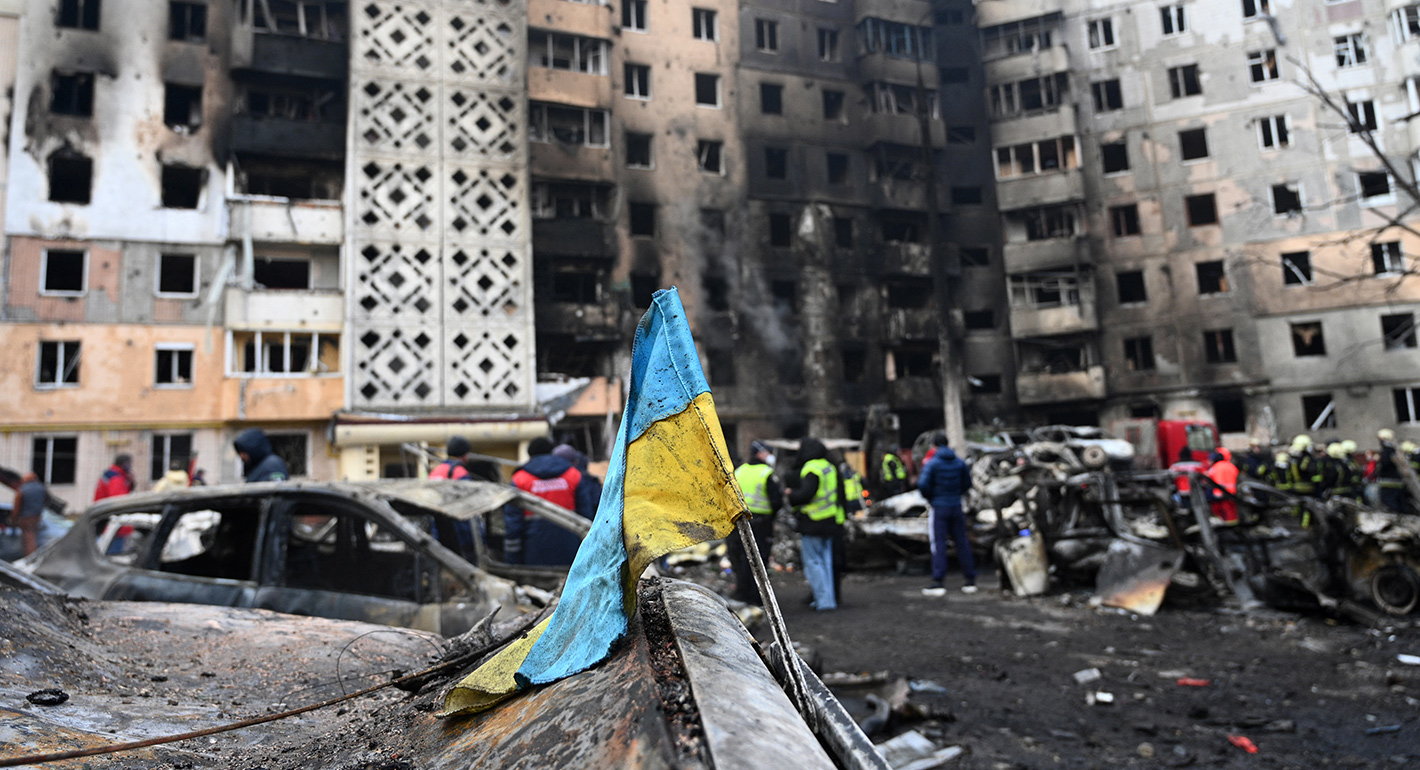
As the war in Ukraine enters its fifth year, it is worth examining where accountability efforts currently stand, how U.S. policy on Russian aggression has shifted, and what the Ukrainian experience reveals about the challenges of holding international aggressors to account.
Federica D’Alessandra
Assessing U.S. compliance with the international laws of war is essential at a time when these frameworks are already fraying.
Federica D’Alessandra

The world has entered an era of upheaval—a period of heightened geopolitical rivalry, deepening political polarization, quickening technological change, glaring economic inequality, accelerating environmental crises, and eroding respect for international law. This moment of disruption and fluidity is also one of opportunity, however. It provides openings for middle powers, both established and emerging, to exercise unaccustomed agency and influence the future of global order.
Carnegie scholars are analyzing middle power responses to this moment of upheaval and assessing whether—and under what conditions—these states can contribute to practical problem solving. They are asking critical, concrete questions: What countries, precisely, are we talking about when we refer to middle powers? In what issue areas do their priorities converge and diverge, including across North-South divides? In what domains can middle powers pack a punch, rather than produce a whimper? Are they willing to shoulder actual burdens and responsibility? Finally, how can middle powers assert themselves globally, without running afoul of or threatening their relations with the United States or China?
The pace of change in the global economy suggests that the IMF and World Bank could be ambitious as they review their debt sustainability framework.
C. Randall Henning
Portraying the world as multipolar belies the complexity, significance, and extent of recent changes and could have disastrous policy consequence. In a multi-order world, relationships within orders are as important as relations between orders.
Trine Flockhart